National Permit for 5 Years at ₹82,500: What the Draft Says
 By Vikram SinghOctober 12, 20265 min read
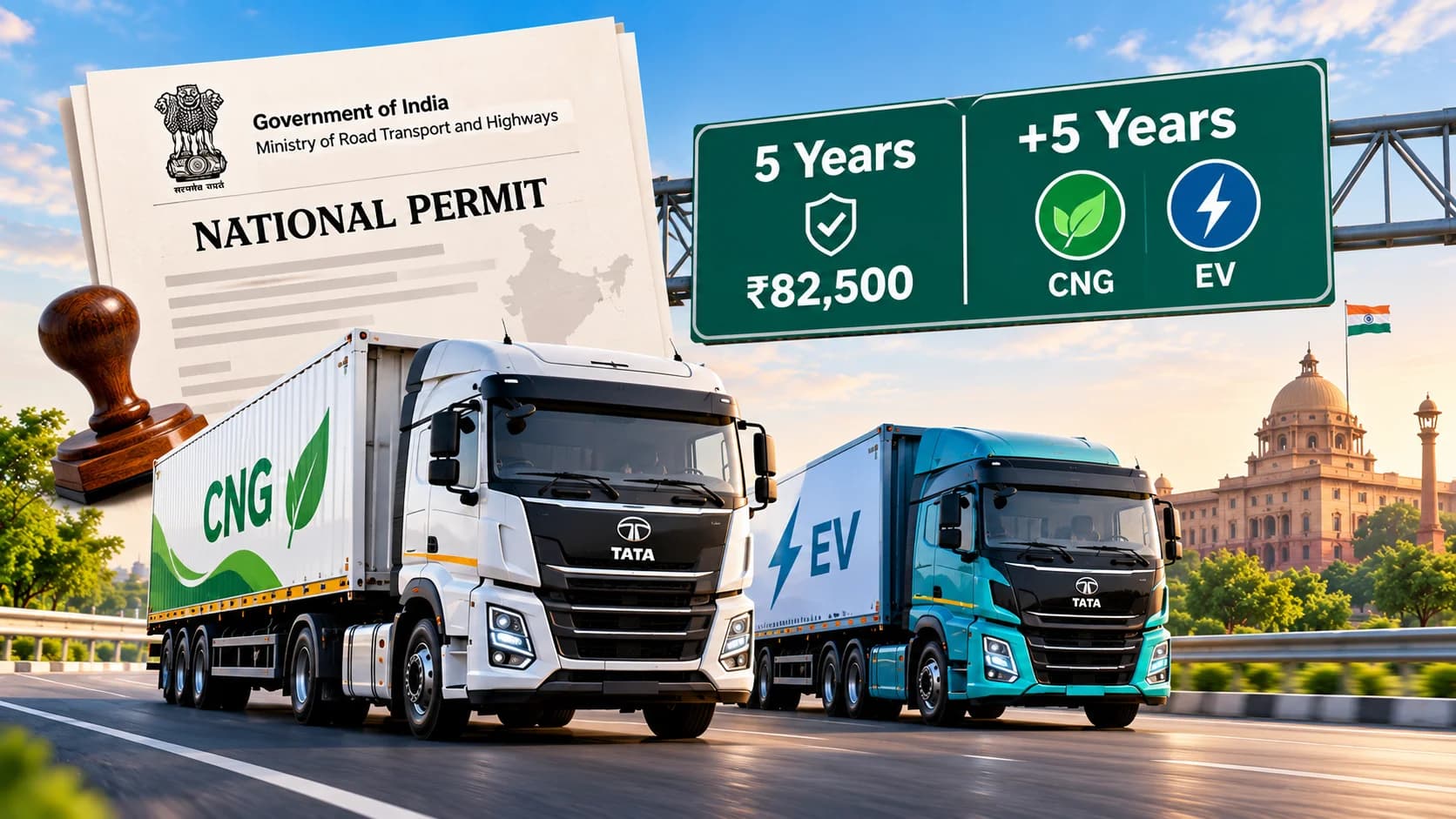
The national permit could soon be renewed once every five years instead of every year. MoRTH has also proposed letting CNG, LNG, electric and hydrogen trucks run on a national permit for five more years than diesel ones. Both are still a draft, not law.
If you run interstate trucks, the second change matters more. It could add five earning years to a clean-fuel truck, and that changes the maths on buying one.
What the draft national permit rules propose
MoRTH published the draft amendments to the Central Motor Vehicles Rules on 10 August 2026 and invited comments for 30 days. That window has now closed, but the final rule hasn't been notified yet. So treat everything below as a proposal that could still change.
There are three main changes:
- A five-year authorisation. Today, you renew your national permit authorisation every year at ₹16,500. Under the draft, you could pay for up to five years at once, ₹82,500 in total.
- Five extra years for clean fuels. Age limits of 12 and 15 years under Rule 88 would rise to 17 and 20 years for battery, hydrogen and natural-gas vehicles, depending on the category.
- Less paperwork. Permit forms 46 and 47 would move online, and Vahan data would fill in forms automatically.
Prices, EMIs, subsidies and permit rules vary by state and change frequently. Verify with your dealer, lender or RTO before you buy.
The five-year national permit: is it worth paying upfront?
The fee doesn't drop. You pay the same ₹16,500 a year, just in one go. So the saving isn't in the fee itself. Instead, it's in time and hassle: no annual renewal, no agent's charge, and no truck stuck because someone forgot the renewal date.
That said, ₹82,500 upfront per truck adds up fast. For a 10-truck fleet, it's ₹8.25 lakh in one payment. If cash is tight, sticking with yearly renewal is perfectly reasonable, because the draft makes five years an option, not a requirement.
Our view is simple. If a truck is newly financed and will run national routes for years, take the five-year option. On the other hand, if a truck is near the end of its life, or you may sell it soon, renew yearly.
Five extra national permit years for CNG and electric trucks
This is the bigger change. Today, a goods vehicle on a national permit has to come off once it hits the age limit, whatever its fuel. Under the draft, a CNG, LNG, electric or hydrogen truck would get five more years.
Those extra years matter because a clean-fuel truck usually costs more upfront. An electric truck, for example, costs far more than a diesel one, even after the PM E-DRIVE e-truck incentive. Five more years of earning spreads that higher price over a longer life, and it also lifts resale value, because a buyer gets more usable years.
However, CNG trucks have taken a hit this year on fuel cost. Check the CNG cost per km after the price rises before you assume the age extension tips the balance.
A smaller change for new truck buyers
The same draft also touches temporary registration, which matters if you buy a chassis and then send it for body building. A chassis without a body would get six months of temporary registration, extendable in 30-day steps. Meanwhile, a fully built vehicle would get 45 days.
In practice, that gives body builders more breathing room during the festive rush, when tipper and container bodies often run late.
What's still unclear
The draft leaves some questions open. It's not yet clear whether trucks already on the road will get the extension, or only new registrations. Similarly, it's not clear how states will treat the five-year authorisation in their own permit systems. One expert quoted on the draft stressed that it needs to be "uniform and standardised" across states.
Also, the age extension sits on top of fitness. A 17-year-old CNG truck would still need to pass fitness every year. With heavy-vehicle fitness fees now at ₹12,500 after 15 years, our guide to commercial vehicle scrappage is worth reading alongside this.
What this means for buyers
- If you're choosing between diesel and CNG or electric for a national-permit truck, the proposed extra five years is a real point for clean fuels. Still, don't count on it until the final rule is out.
- Once the rule is final, take the five-year authorisation for long-life trucks and stay yearly for older ones.
- Keep your Vahan records clean, because the new forms will pull data straight from them.
- Watch for the final notification. We'll update this page when MoRTH publishes it.
FAQs on the national permit draft
How much will a five-year national permit cost?
Under the draft, ₹82,500, which is five years at the current ₹16,500 a year.
Is the five-year national permit already in force?
No. It's a draft from 10 August 2026. The comment period has closed, but the final rule hasn't been notified.
Which trucks get the five-year age extension?
Under the draft, battery-electric, hydrogen and natural-gas (CNG/LNG) vehicles on a national permit. Diesel trucks don't.