Electric Bus Share to Hit 17%: Time for Private Fleets?
 By Vikram SinghOctober 21, 20265 min read
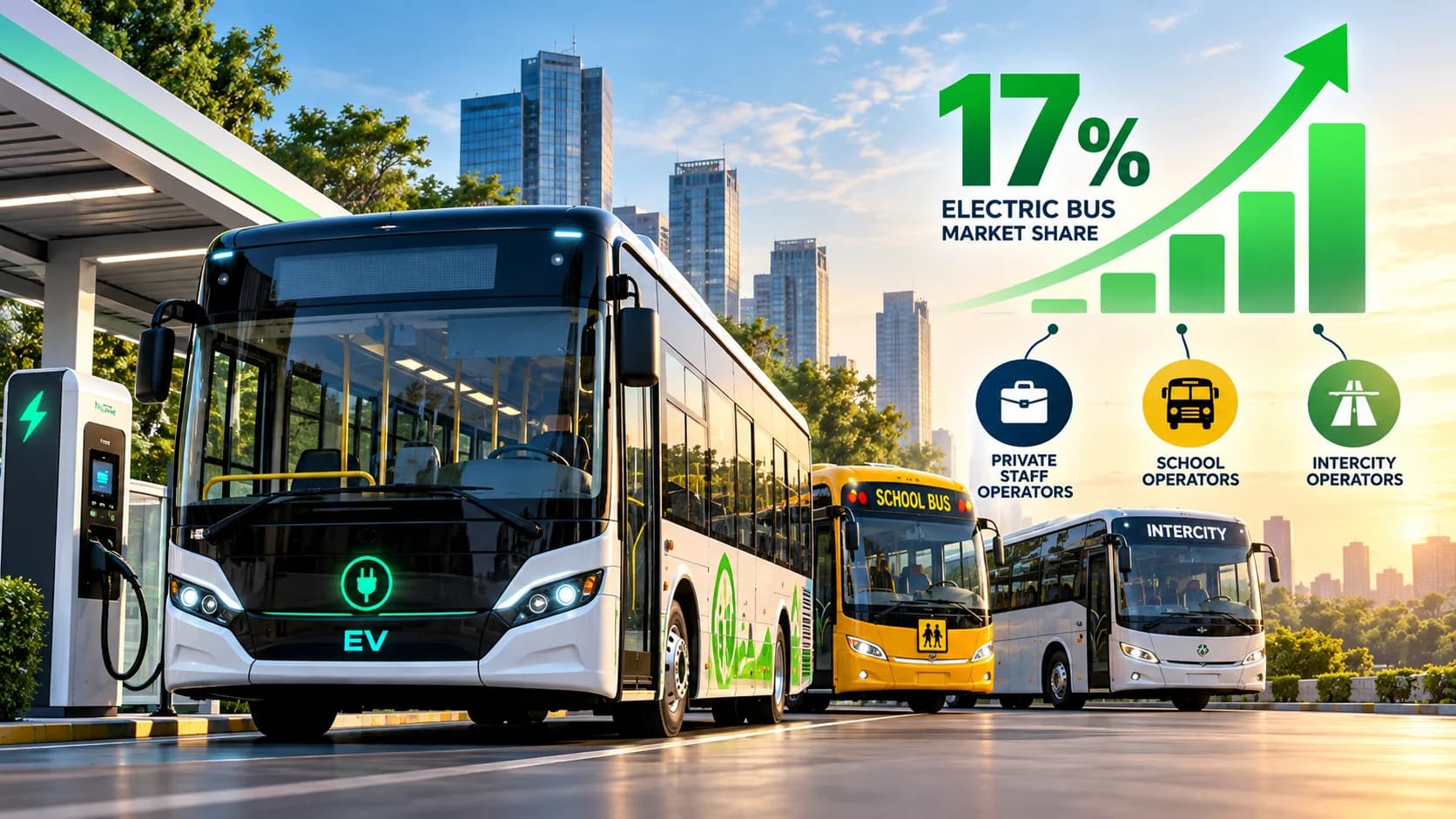
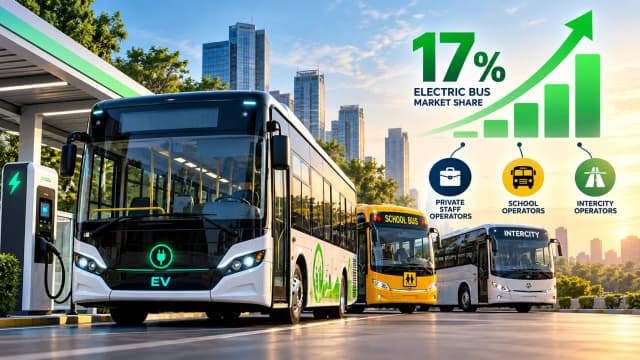
The electric bus share of new registrations in India is set to more than double, from 7% in FY26 to about 17% next fiscal, according to Crisil Ratings. Almost all of that growth is government buying. But if you run staff, school or intercity buses, the bigger number in the report is this: about 40% of the private fleet is due for replacement in the next three to five years.
So many of you will face the same question soon. Should your next bus be diesel or electric?
What's driving the electric bus share up
Crisil's forecast, reported by Autocar Professional on 14 October, rests on public money. State and city transport undertakings had about 29,000 e-buses on order as of September 2026. Under PM e-Bus Sewa, the government also covers roughly 30% of the per-km rental those undertakings pay. In addition, states have set up payment security mechanisms, which reassure makers and lenders.
Orders are still coming. Jammu, for example, is set to get 75 seven-metre AC e-buses, with PMI Electro named the lowest bidder for that lot, the Kashmir Horizon reported. The formal award is still pending, though.
Why the private electric bus share lags
Private operators run 85–90% of India's buses, yet they've barely started switching. The reasons are simple. First, the central e-bus support mostly goes to public tenders, so you pay the full upfront price. Second, makers fill large government orders first, which can push a small private order down the queue. We covered both in detail in our electric bus sales report for H1 FY27.
Charging is the third problem, and Crisil's report puts a number on it. Grid connections and dedicated power at depots typically take up to 12 months. That's why Crisil expects only 75–80% of public orders to reach the road on time.
If government depots wait a year for power, a private depot won't get it faster. So if you're even considering e-buses for 2027 or 2028, apply for the power connection now. It's the longest lead-time item, and it costs little to start.
Diesel or electric for your next bus?
There's no single answer, because it depends on how far your buses run each day. Crisil's 2023 analysis put e-bus ownership costs 15–20% below diesel and CNG over a 15-year life, with breakeven in 6–7 years. That analysis, however, was for buses doing high daily kilometres on fixed routes.
Here's how we'd think about it by segment:
- Staff buses running two shifts on fixed routes are the closest match to a city bus. They're the strongest case for switching.
- A school bus, on the other hand, may do 80 km a day and then sit idle. At that usage, the payback stretches well beyond the 6–7 years Crisil found.
- Intercity sleeper and seater coaches still lack charging along most routes, so diesel stays the practical choice for now.
Prices, EMIs, subsidies and permit rules vary by state and change frequently. Verify with your dealer, lender or RTO before you buy.
Smaller e-buses change the maths
The Jammu order is worth a second look, because those are 7-metre buses. Most early e-bus tenders were for 9-metre and 12-metre city buses, which are bigger than most school and staff operators need. As more makers build smaller models for city tenders, private buyers should also get more choice in sizes that suit them.
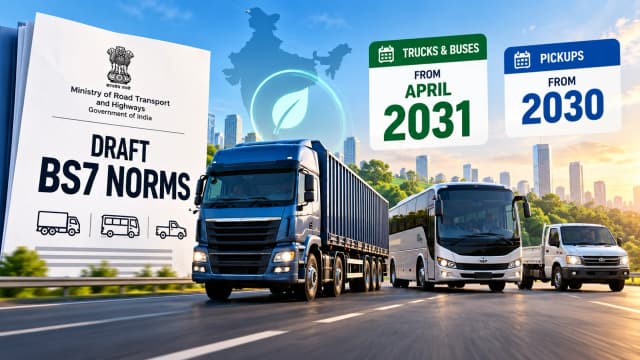
Meanwhile, keep the regulatory clock in mind too. New buses must have emergency braking from 2027, as we explained in our ADAS for buses explainer. BS7 norms then follow in 2031 under the latest draft, which will raise diesel bus prices. Both nudge the electric bus share up over time.
What this means for buyers
- If a third or more of your fleet is due for replacement by 2029, plan the mix now rather than bus by bus.
- Apply for depot power early, because it takes up to a year.
- Start with your highest-kilometre fixed routes, since that's where an e-bus pays back fastest.
- Don't count on a central subsidy for a private e-bus. Instead, check your state's EV policy and leasing offers.
Electric bus share FAQs
What is the electric bus share of new bus registrations?
It was about 7% in FY26. Crisil Ratings expects it to reach about 17% next fiscal.
Who buys most electric buses in India?
State and city transport undertakings, mostly under PM e-Bus Sewa and PM E-DRIVE tenders. They had about 29,000 e-buses on order in September 2026.
Will private operators raise the electric bus share?
Eventually, yes. About 40% of the private fleet is due for replacement in three to five years, so that's the opening. However, upfront cost and charging are still holding operators back.
How long does it take to set up e-bus charging at a depot?
Grid connection and dedicated power can take up to 12 months, according to Crisil, so start early.