Electric Auto Price 2026: 5 E-Autos Compared on Range, EMI
 By Vikram SinghOctober 13, 20265 min read
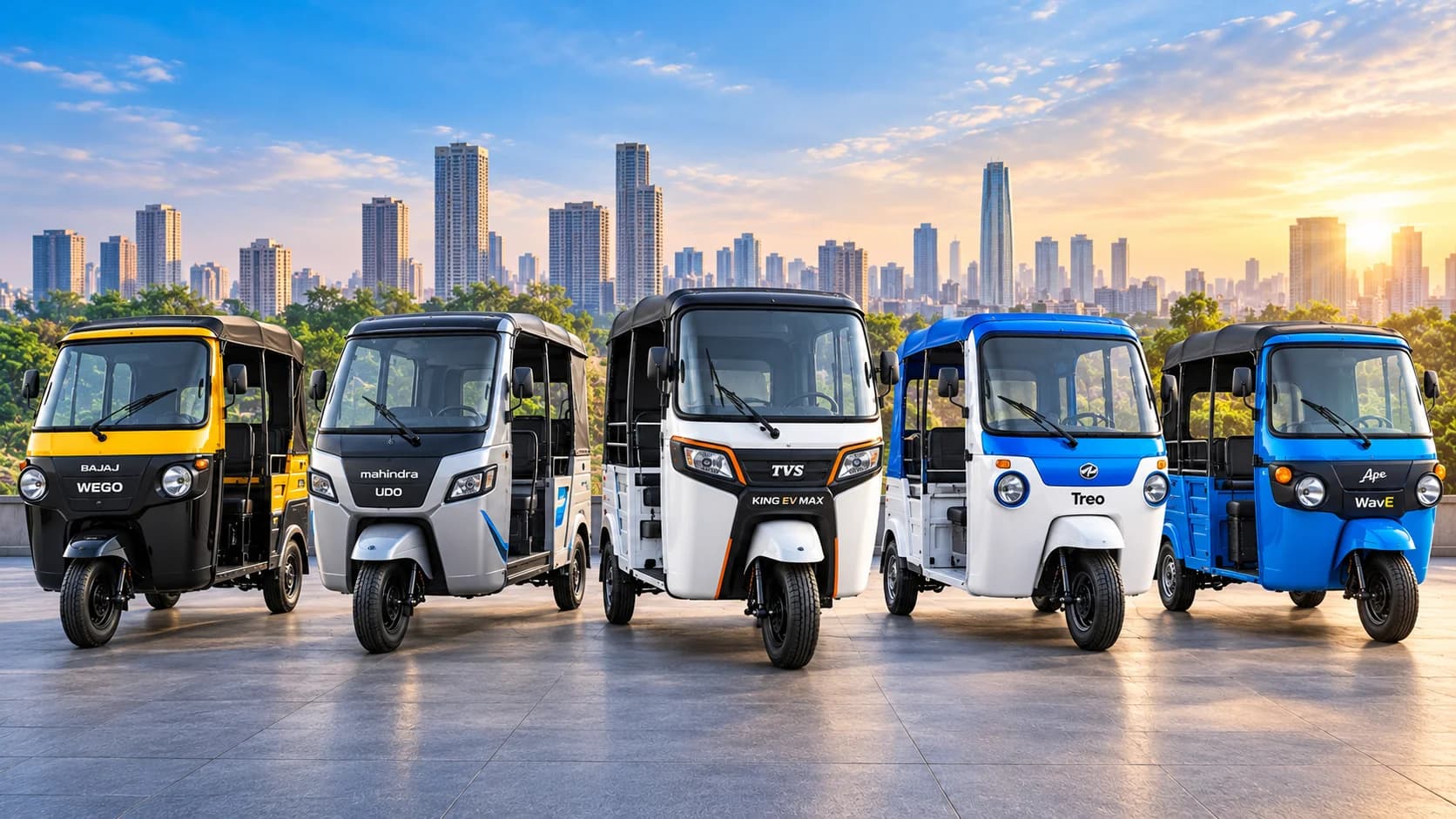
Electric auto price in 2026 runs from about ₹2.55 lakh to ₹4.41 lakh ex-showroom. That's a wide gap, but the cheapest one isn't always the best deal. In practice, what you're really paying for is range, warranty and how long the battery lasts.
So here's how the main passenger e-autos compare, and which one suits the way you drive.
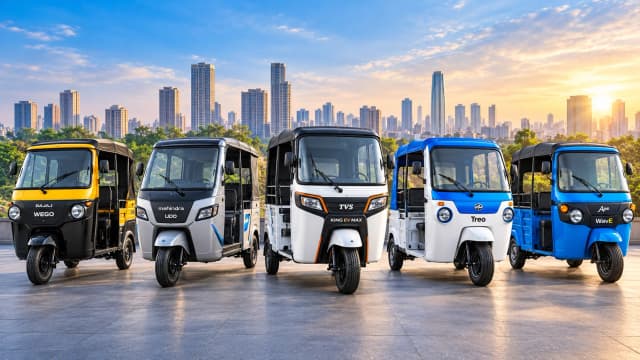
Electric auto price and range compared
| Model | Price, battery and range |
|---|---|
| Piaggio Apé WavE (L3) | ₹2.55 lakh; 5.4 kWh, about 90 km real-world |
| TVS King EV Max | ₹2.95 lakh at launch; LFP pack, 179 km claimed |
| Mahindra Treo | ₹2.80–3.28 lakh; 10.24 kWh, about 150 km |
| Mahindra UDO | ₹3.59 lakh intro; 11.7 kWh, 200 km real-world |
| Bajaj WEGO P9018 | ₹4.41 lakh; 17.7 kWh, 296 km certified |
These prices come from each maker's launch announcement or listed price. For example, the Bajaj WEGO P9018 launched in February at ₹4,41,247. The Mahindra UDO carries an introductory ₹3,58,999 against a list price of ₹3,84,299. Meanwhile, the Piaggio Apé WavE arrived in July at ₹2.55 lakh.
Prices, EMIs, subsidies and permit rules vary by state and change frequently. Verify with your dealer, lender or RTO before you buy.
The cheap one has a catch
The Apé WavE is the lowest electric auto price on this list, but it's an L3 vehicle. As a result, it has a 40 km/h top speed and about 90 km of real range. It's built for fixed shuttle routes, such as station-to-colony runs or campus loops, not for full-day city work.
So if you drive 150 km or more a day, you'd have to charge it twice. For most auto drivers, then, the real choice starts with the L5 models from about ₹2.8 lakh.
Which electric auto suits your route
For 100–150 km a day in one city: the TVS King EV Max or the Mahindra Treo. Both are proven and cheaper to buy, so they'll do a normal city shift on one charge. The TVS also comes with a 6-year or 1.5 lakh km warranty, which is generous at this price.
For 150–200 km with some highway: the Mahindra UDO. Its 200 km real-world range gives you a buffer, and it also matches TVS with a 6-year or 1.5 lakh km warranty. Mahindra also offers free service up to 1 lakh km, which really helps a first-time EV owner.
For long shifts, outstation runs or two-driver use: the Bajaj WEGO P9018. At ₹4.41 lakh it's the costliest, but its 296 km certified range means one charge covers a double shift. Its warranty, though, is shorter at 5 years or 1.2 lakh km.
Electric auto price on EMI
Most buyers finance, so the EMI matters more than the sticker. Here, we've assumed an 80% loan at 14% over three years, which is typical for NBFC auto loans. Of course, your rate may differ.
- Apé WavE: about ₹7,000 a month, so it's the lightest on cash flow
- TVS King EV Max or Treo: about ₹8,100–8,200 a month
- Mahindra UDO: about ₹9,800 a month
- Bajaj WEGO P9018: about ₹12,100 a month, but it earns over a longer shift
The RBI raised rates this week, though, so get a fresh quote. Our note on CV loan EMI after the rate hike shows how much it adds.
Prices, EMIs, subsidies and permit rules vary by state and change frequently. Verify with your dealer, lender or RTO before you buy.
Running cost against CNG
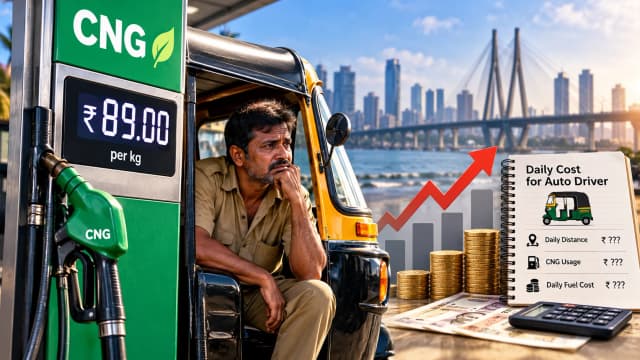
At a home tariff of about ₹8 a unit plus charging losses, an e-auto costs roughly 50 to 65 paise a km to run. A CNG auto costs several times that after this year's price hikes, so check our CNG auto cost per km. On 150 km a day, therefore, the difference covers a large part of the EMI.
That's why electric now makes up about 65% of new three-wheelers, as our September three-wheeler sales report shows. Also note that the PM E-DRIVE subsidy for e-autos ended in March 2026, so the prices above are what you actually pay.
What this means for buyers
- Don't buy on the electric auto price alone. Instead, match the range to your daily kilometres, plus a 20% buffer for heavy traffic, hills and an ageing battery.
- Choose a lithium-ion LFP pack with at least a 5-year warranty. After all, the battery sets your resale value.
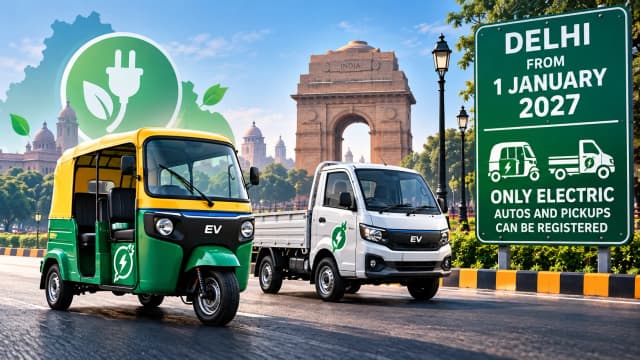
- Check the city permit before you buy. For instance, some cities issue new permits only for electric autos, while others cap the total.
- Also ask for the on-road price in writing, including registration, insurance and the charger.
FAQs on electric auto price
What is the cheapest electric auto price in India in 2026?
The Piaggio Apé WavE at ₹2.55 lakh ex-showroom. However, it's a low-speed L3 model with about 90 km of range.
Which electric auto has the longest range?
That's the Bajaj WEGO P9018, with a certified 296 km from a 17.7 kWh battery.
Is there a subsidy on electric autos in 2026?
Not from the Centre, because the PM E-DRIVE incentive for e-autos ended on 31 March 2026. However, some states still run their own schemes.