Electric Heavy Truck: Which Routes Make an e-HCV Pay?
 By Vikram SinghOctober 21, 20265 min read
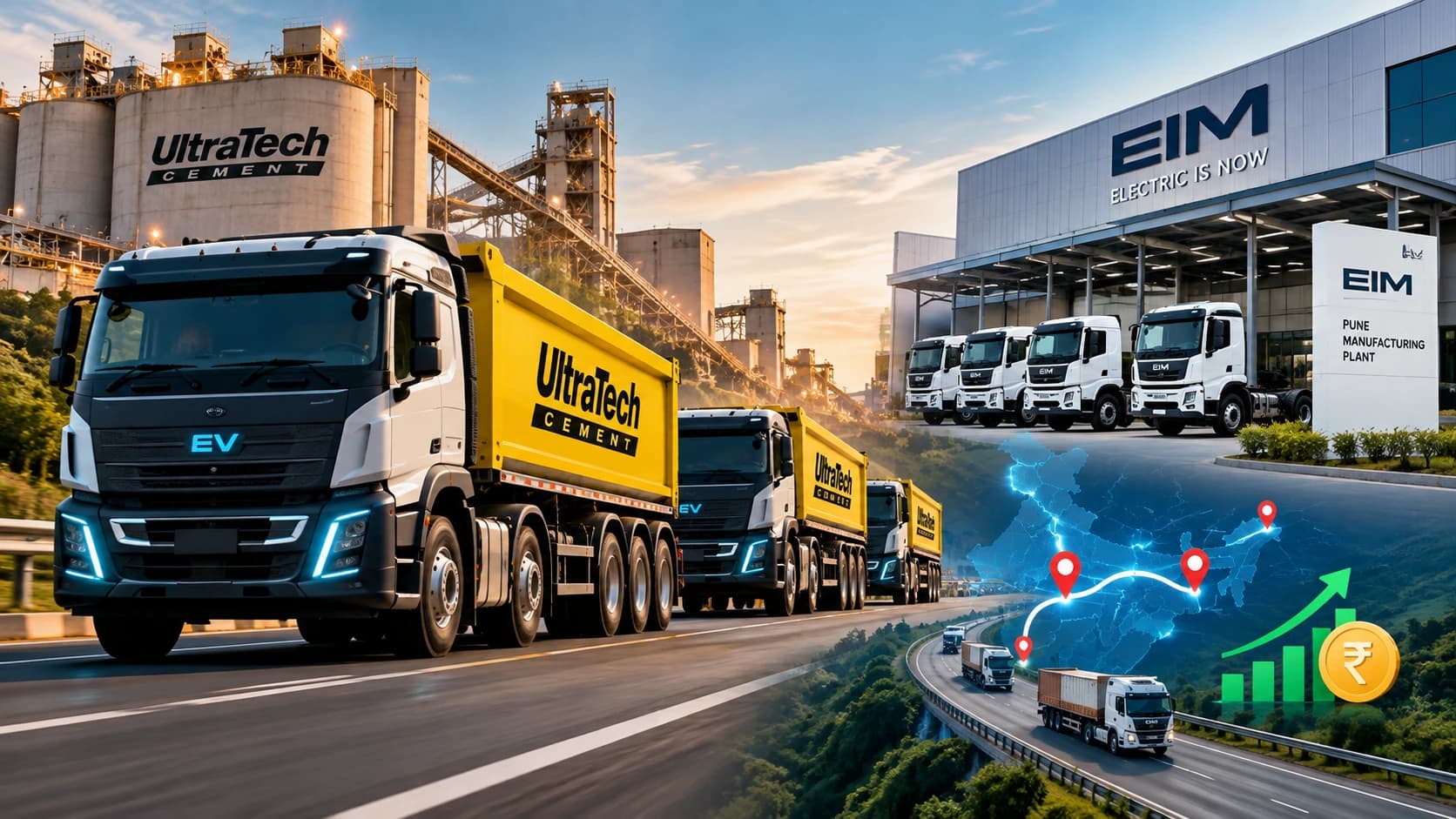
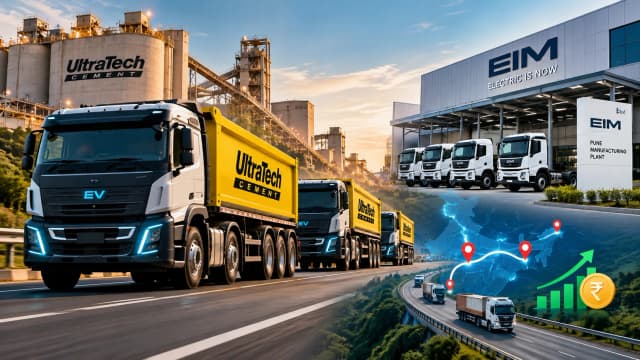
The electric heavy truck stopped being a pilot project in India this autumn. UltraTech Cement plans to run more than 600 e-trucks by December. Meanwhile, Energy in Motion opened a ₹500 crore e-truck plant near Pune on 14 October. If you haul cement, clinker, coal or containers on fixed routes, it's time to work out whether one pays for you.
What UltraTech is doing with 600 e-trucks
UltraTech announced in September that it will have more than 600 electric trucks in its logistics by December 2026. They'll move about 5 million tonnes of clinker and other material a year across seven states, from Gujarat to Odisha. The work is mostly mine-to-plant and plant-to-plant hauling.
Notably, UltraTech has signed service contracts rather than placing a straight purchase order. Its partners are Tata Motors, Ashok Leyland, IPLTech, Energy in Motion and Sany, plus logistics firms. That typically means the truck makers and fleet partners carry the asset, while UltraTech pays for the haulage.
The company says the fleet will displace about 39 million litres of diesel a year. Divide that across 600 trucks and each one replaces up to 65,000 litres annually. At Delhi's ₹95.20, that's roughly ₹62 lakh of diesel per truck per year. That number explains the whole deal: these trucks run very long hours on short, repeated loops.
Energy in Motion's electric heavy truck plant
EIM's new complex at Talegaon, near Pune, assembles e-trucks and lithium-ion battery packs, and it tests batteries on site, Autocar Professional reported. Its stated initial capacity is 5,000 vehicles per shift per year. EIM's partners are Foton for the trucks, CATL for battery technology and Shanghai Enneagon for robotic battery swapping.
Its first product is the Ashwa, a 55-tonne tractor. When EIM put trucks into service at JNPA port last year, it priced the Ashwa at ₹63 lakh without the battery, electrive reported. The 282 kWh pack swaps out in about seven minutes.
That swap model is the key for you. You buy the truck, while EIM owns the batteries and runs the swap stations. It had six heavy-duty stations in Delhi-NCR and at JNPA by July, with capacity for 840 swaps a day. It's also targeting 40 by March 2027, including at HPCL fuel outlets, according to Autocar Professional.
Prices, EMIs, subsidies and permit rules vary by state and change frequently. Verify with your dealer, lender or RTO before you buy.
Which routes make an electric heavy truck pay
An e-HCV costs far more to buy than a diesel one. So it only pays when it runs enough hours to recover that gap. In practice, that points to a few kinds of work:
- Mine-to-plant and plant-to-plant shuttles, like UltraTech's, where the truck returns to the same yard every few hours.
- Port and container-yard runs, such as JNPA to nearby warehouses, where a swap station sits on the route.
- Fixed industrial loops near a swap or charging hub, especially on double or triple shifts.
By contrast, long-haul work with unpredictable routes still suits diesel. Until a swap or charging station exists at both ends of your lane, you'll lose too much time. For the same reason, a single-shift truck won't burn enough diesel to justify the switch.
Does the PM E-DRIVE incentive help?
It can. Under PM E-DRIVE, a 35–55 tonne electric truck can get up to ₹9.3 lakh, and an 18.5–35 tonne one up to ₹9.6 lakh. However, the incentive is the lowest of three numbers: the band cap, ₹5,000 per kWh, or 10% of the ex-factory price. You also have to scrap an old diesel truck of equal or higher GVW. Our electric truck price guide explains the full rules.
For a battery-less truck sold on a swap subscription, though, it's not clear how the 10% and per-kWh limits apply. So ask the maker to show the incentive on the invoice before you commit.
Prices, EMIs, subsidies and permit rules vary by state and change frequently. Verify with your dealer, lender or RTO before you buy.
What this means for buyers
- Count your diesel litres first. If a truck burns tens of thousands of litres a year on a fixed loop, an electric heavy truck deserves a proper quote.
- Ask whether your route passes a swap station today, not just in the maker's plans.
- Compare buying with a service contract like UltraTech's, because that moves the battery risk off your books.
- Keep an eye on diesel too. Our diesel price explainer shows what a hike would add to an HCV's monthly bill.
Electric heavy truck FAQs
How much does an electric heavy truck cost in India?
EIM's 55-tonne Ashwa tractor was priced at ₹63 lakh without the battery, which you rent through its swap network. Other makers usually price heavy e-trucks per deal.
How long does a battery swap take?
EIM says about seven minutes for its heavy trucks, compared with hours for a full charge.
Who is buying e-HCVs?
Mostly large shippers and port operators so far. UltraTech Cement, for example, plans more than 600, and JNPA has deployed battery-swappable trucks at its port.
Is there a subsidy for an electric heavy truck?
Yes. PM E-DRIVE offers up to ₹9.6 lakh depending on weight, but you must scrap an old truck to claim it.