Mumbai CNG Price at ₹89: What It Costs an Auto Driver Daily
 By Vikram SinghOctober 16, 20265 min read
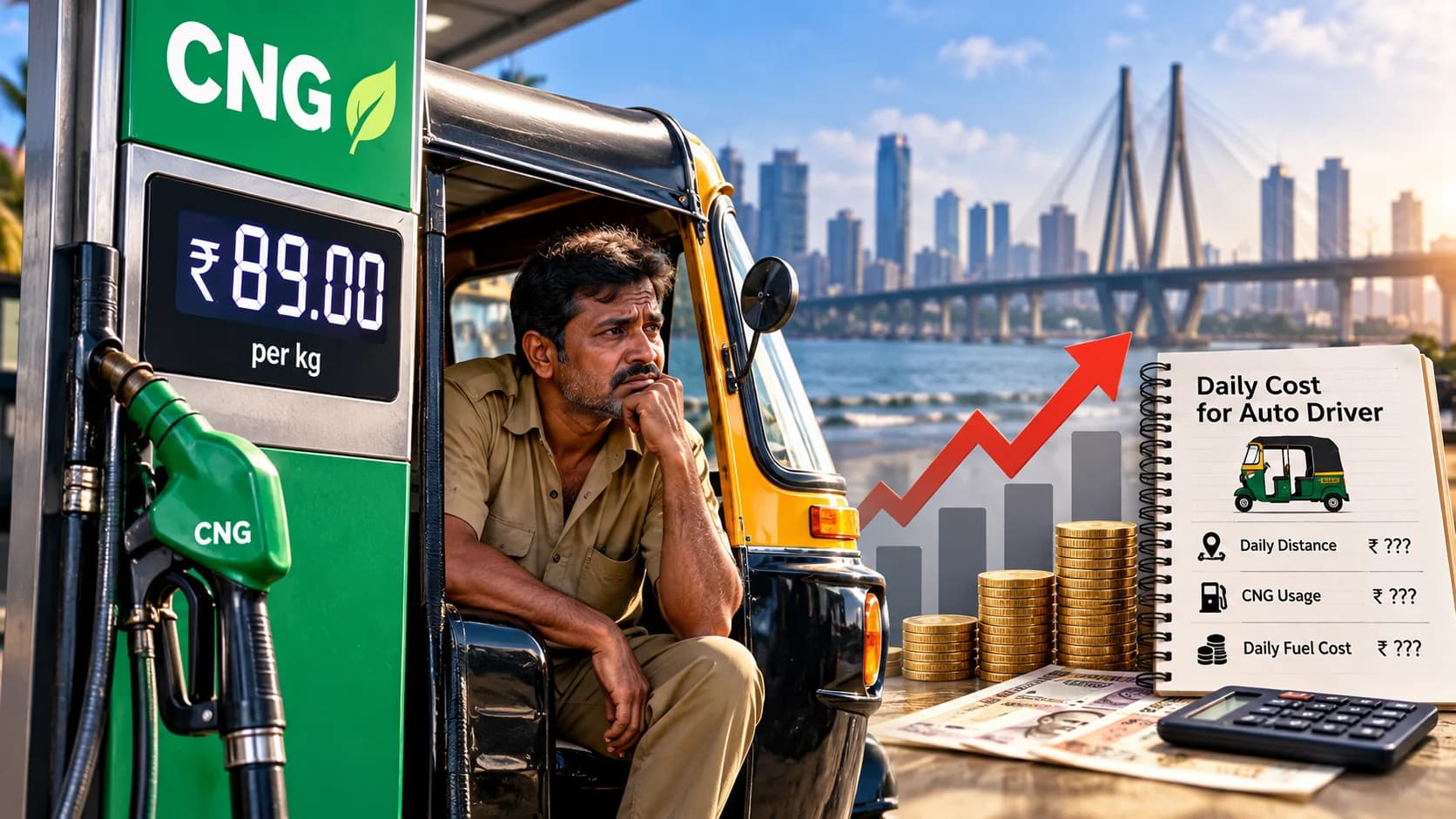
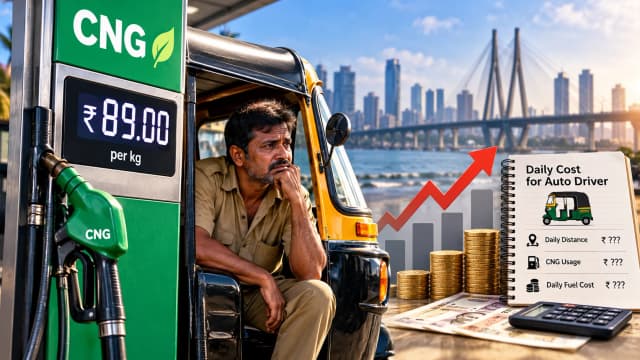
The Mumbai CNG price rose to ₹89 a kg on 1 October, the fifth hike this year. If you drive an auto 120 km a day, you're now spending about ₹35 more on gas every day than you were in March. That's close to ₹1,000 a month. However, September's fare revision has more than covered it, at least on paper.
How the Mumbai CNG price climbed in 2026
Mahanagar Gas (MGL) has raised the price in five steps since April, the Free Press Journal reported. It added ₹1 on 12 April, then ₹2 each on 14 May, 30 May and 1 September. Finally, the latest ₹1 came on 1 October. That's ₹8 in total, from about ₹81 a kg before April.
MGL blamed higher input gas costs, including imported LNG, whose price follows international gas markets. So as long as West Asia stays tense, don't bet on the price coming back down soon.
What the Mumbai CNG price costs you per day
Bajaj quotes about 27 km per kg for its RE CNG auto. Real-world mileage in Mumbai traffic is often lower, so treat this as a best case. At that figure, gas now costs about ₹3.30 per km, compared with ₹3.00 before April.
| Daily km | Gas at ₹81 | Gas at ₹89 | Extra a month (26 days) |
|---|---|---|---|
| 120 km | ₹360 | ₹395 | About ₹925 |
| 150 km | ₹450 | ₹495 | About ₹1,155 |
If you rent your auto by the shift, though, that extra comes straight out of your earnings. Owner-drivers feel it just as much, because the EMI doesn't change while the gas bill does.
Prices, EMIs, subsidies and permit rules vary by state and change frequently. Verify with your dealer, lender or RTO before you buy.
The fare revision has covered it, for now
On 1 September, the Mumbai Metropolitan Region Transport Authority raised the auto minimum fare from ₹26 to ₹27. It also raised the per-km rate from ₹17.40 to ₹18.22, the Free Press Journal reported.
Do the maths and the driver comes out ahead. The fare went up by 82 paise per km, while gas has added about 30 paise per km since April. So on a fully metered day, you're about 50 paise per km better off than before the hikes. In practice, of course, empty kilometres and waiting time eat into that.
Kaali-peeli taxi drivers got a similar deal. Their minimum fare went from ₹31 to ₹33, while the per-km rate rose from ₹20.66 to ₹21.90. Since a CNG taxi burns more gas per km than an auto, though, check your own mileage before you assume you're ahead.
There's one catch, however. You have until the end of November to recalibrate your meter or display an RTO-approved fare card. Until you do, you may still be charging the old rate.
Unions are watching the next step. Thampi Kurien, president of an auto-rickshaw union, said the union may seek another fare revision within six months if CNG prices keep rising and operating costs go up by 25%.
Mumbai CNG price vs an electric auto
This is where the bigger saving sits. An e-auto costs roughly 50–65 paise a km to run on home charging at about ₹8 a unit, as we worked out in our electric auto price guide. Against ₹3.30 for CNG, that's about ₹2.70 saved every km.
On 120 km a day, then, that adds up to roughly ₹8,400 a month. That's about the EMI on a mid-priced e-auto such as the Mahindra Treo. Still, charging is the hard part in Mumbai, since many drivers don't have a parking spot with a socket. So before you switch, sort out where you'll charge every night.
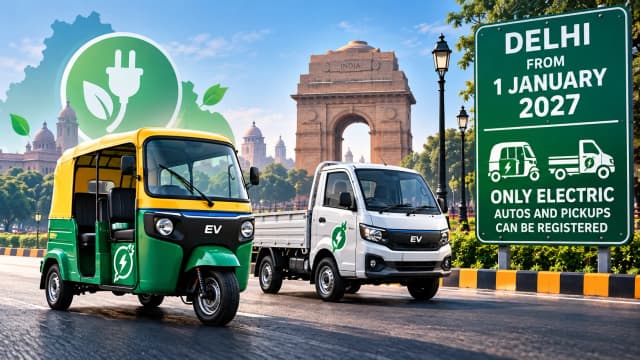
Mumbai isn't forcing the change yet, either. Delhi, by contrast, will register only electric autos from 1 January 2027, as our Delhi electric auto rule explainer sets out. For now, Mumbai drivers can still choose.
Prices, EMIs, subsidies and permit rules vary by state and change frequently. Verify with your dealer, lender or RTO before you buy.
What this means for buyers
- Recalibrate your meter or get the new fare card before the November deadline, because the fare hike is worth more than the gas hike.
- Budget for more hikes. MGL's costs track global gas prices, which have been rising.
- If you're buying a new auto, price an electric one too, as long as you have a reliable place to charge.
- For the national picture, see our CNG price hike explainer on Delhi and mini trucks.
Mumbai CNG price FAQs
What is the Mumbai CNG price today?
It's ₹89 a kg, after MGL's ₹1 increase on 1 October 2026.
How many times has the Mumbai CNG price gone up in 2026?
Five times since April, adding ₹8 a kg in total.
What is the auto fare in Mumbai now?
Since 1 September, the minimum fare is ₹27, and each extra km costs ₹18.22.
Will auto fares go up again?
Possibly. A union leader has said they may seek another revision within six months if operating costs rise by 25%.