GRAP Truck Rules: Which Trucks Can Enter Delhi This Winter

If your truck sleeps in a Delhi yard and still carries a BS-IV sticker, this winter's GRAP truck rules can park it on the worst-air days. Milk or medicines on board won't save it either. CAQM has revised the plan, so the essential-goods pass that kept many old trucks running is gone. Stage I has been in force since 21 October, so it's worth planning now, before the stages climb.
Where GRAP truck rules stand this week
The CAQM sub-committee invoked Stage I across the NCR on 21 October 2026, after Delhi's AQI jumped from 179 to 244 in a day. Stage I is the mild end. Even so, it already matters for two groups. Bus operators feel it first. Under the revised plan, BS-IV and older buses from NCR towns and other states are stopped at Stage I. So only CNG, electric and BS-VI diesel buses get through. Meanwhile, through-trucks are pushed onto the Eastern and Western Peripheral Expressways, Business Standard reported.What changed in the September revision
CAQM's full commission approved the new schedule at its 30th meeting on 28 September 2026, according to PIB. As a result, it now lists 48 actions, with 25 at Stage I, eight at Stage II, 10 at Stage III and five at Stage IV. For fleets, though, one line in it matters most. Earlier, a BS-IV truck carrying essential commodities could keep running at Stages III and IV. Now that exemption has been removed for BS-IV and older goods vehicles. So a dairy or sabzi route can't lean on its cargo any more. The bus curb also moved down from Stage II to Stage I, which is why it bites already.GRAP truck rules stage by stage
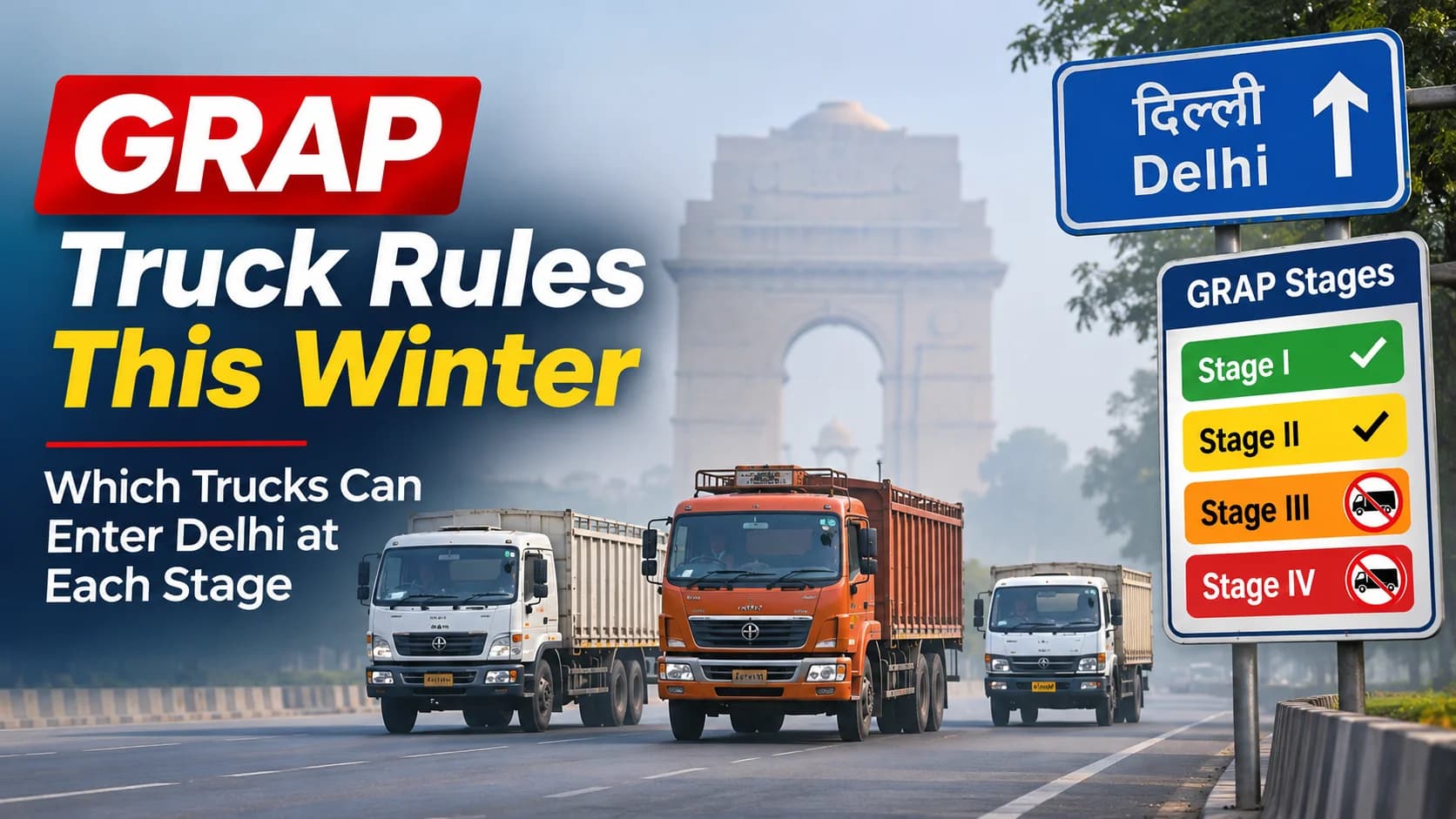
GRAP stacks up. So each stage keeps everything from the stages below it and adds its own curbs. This is how each stage hits trucks and buses under the revised schedule:| Stage (AQI) | What it means for trucks and buses |
|---|---|
| I (201–300) | BS-IV and older buses from outside Delhi stopped; through-trucks diverted to the peripheral expressways |
| II (301–400) | No new truck curbs |
| III (401–450) | Outside-Delhi BS-IV diesel LGVs and MGVs barred; Delhi-registered BS-IV diesel MGVs off the road |
| IV (above 450) | Truck entry stopped except CNG, LNG, electric and BS-VI diesel; Delhi-registered BS-IV diesel HGVs off the road |
Prices, EMIs, subsidies and permit rules vary by state and change frequently. Verify with your dealer, lender or RTO before you buy.
How the 1 November rule changes the picture
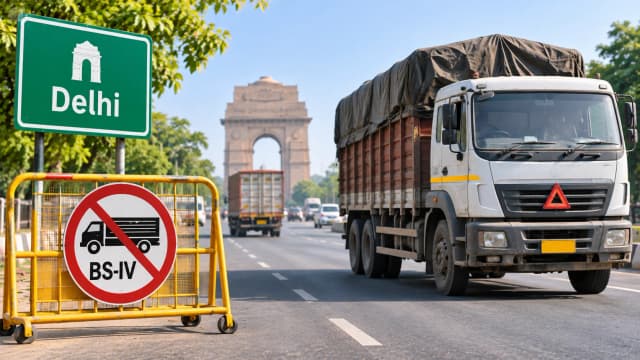
There's also a second rule on top of GRAP, and it doesn't wait for bad air. From 1 November 2026, BS-IV goods vehicles registered outside Delhi can't enter the city at all. Since we covered that in detail in our Delhi BS-IV truck ban explainer, we won't repeat it here. So for an outside-Delhi BS-IV truck, the Stage III line in the table changes very little after 1 November, because it's already locked out. Instead, the GRAP truck rules really hit a different group. That's trucks registered in Delhi itself, which the 1 November rule leaves alone.The real exposure is Delhi-registered BS-IV trucks
Take a Delhi-registered BS-IV diesel truck of 7.5 to 12 tonnes GVW. It's the kind that runs from Okhla to Azadpur all day. That's a medium goods vehicle, so it stops the moment Stage III is called. A Delhi-registered BS-IV heavy truck lasts a little longer, but it's off the road at Stage IV. And these aren't hypothetical days. Last season CAQM went to Stage IV as late as 18 January 2026, so the risk runs well past Diwali. Meanwhile, the EMI doesn't stop. For example, a ₹35 lakh truck loan at 10% over five years costs roughly ₹74,000 a month. That's about ₹2,500 for every idle day. There's one more check that catches people out, too. Since 1 October, Delhi pumps can refuse fuel to any vehicle without a valid PUC. Also, ANPR cameras at about 500 stations flag it. So renew PUCs across the fleet now. An expired one strands a BS-VI truck just as surely.Prices, EMIs, subsidies and permit rules vary by state and change frequently. Verify with your dealer, lender or RTO before you buy.