UP Roadways Electric Buses: 250 E-Buses, Delhi 1 Nov Rule
By AdityaSeptember 30, 2026
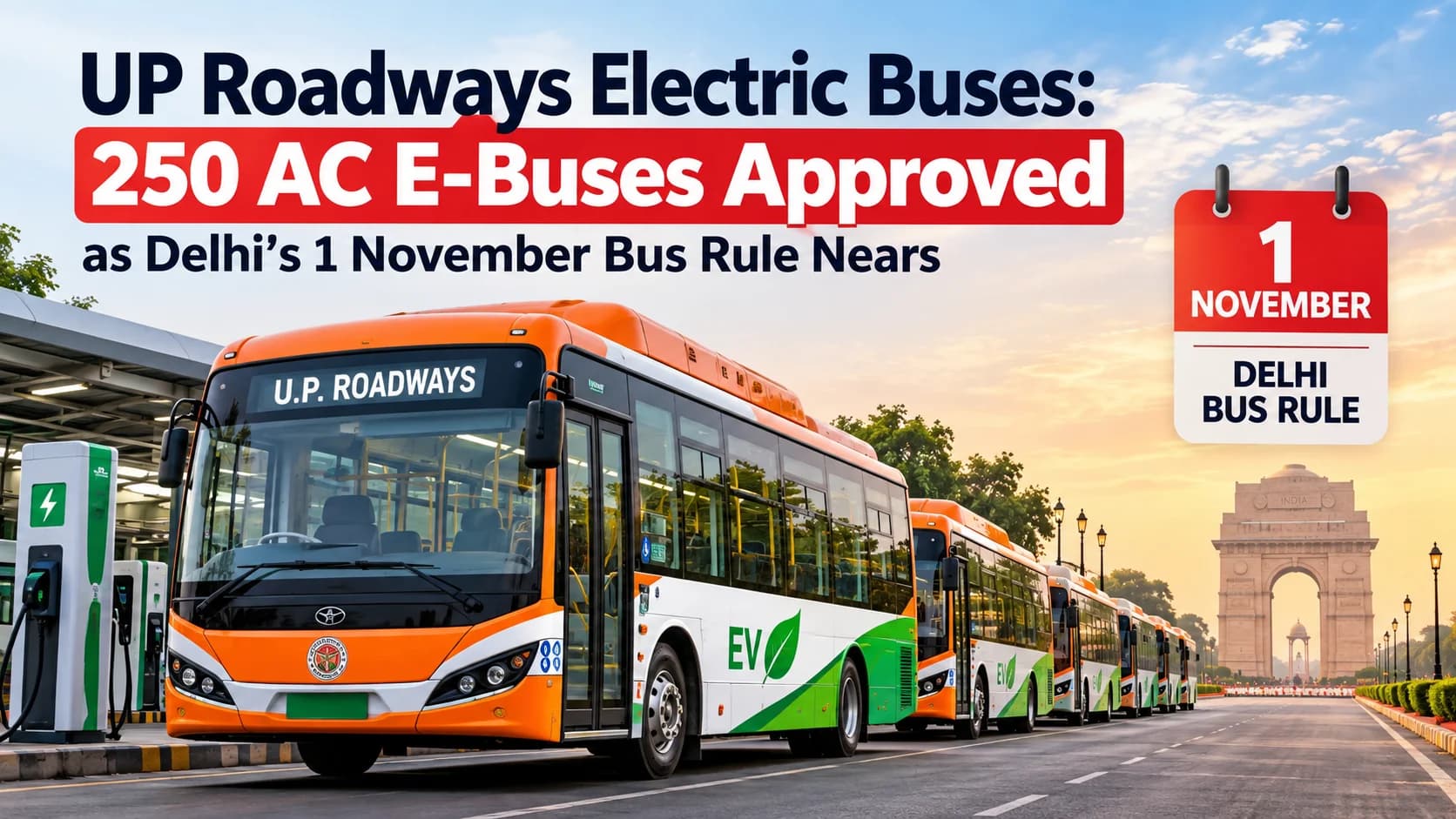
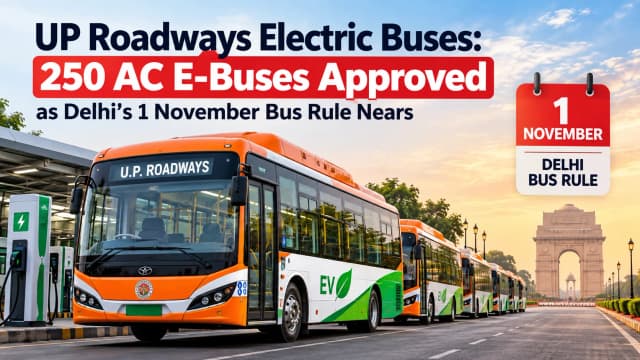
UP Roadways electric buses are getting a big boost, because the Uttar Pradesh cabinet has approved 250 new air-conditioned e-buses for UPSRTC at a total cost of ₹425.50 crore, of which the state is paying ₹400 crore. The trigger is Delhi's tightening bus rules, and those rules also hit private operators. From 1 November 2026, contract-carriage, school and tourist-permit buses entering Delhi must be BS-VI diesel, CNG or electric.
So if you run buses into Delhi, or hire them for staff or students, this matters as much to you as it does to UPSRTC.
What UP approved for UP Roadways electric buses
| Detail | Figure |
|---|---|
| Buses | 250 AC electric (100 × 50-seat, 150 × 41-seat) |
| Total cost | ₹425.50 crore |
| Funding | ₹400 crore state, ₹25.50 crore UPSRTC |
| Average per bus (our maths) | About ₹1.70 crore |
| Timeline | Financial year 2026–27 |
The buses will run between Uttar Pradesh and Delhi, as well as to the state's main religious and tourist destinations, according to the cabinet decision. However, the announcement didn't say how the buses will be procured, where they'll charge or when they'll arrive.
Prices, EMIs, subsidies and permit rules vary by state and change frequently. Verify with your dealer, lender or RTO before you buy.
Why UP Roadways electric buses, and why now
State buses from NCR towns have been under cleaner-fuel rules for a while. For example, CAQM directions already require state bus services between Delhi and NCR towns in Haryana, Rajasthan and UP to be electric, CNG or BS-VI diesel. In addition, earlier directions (Nos. 78 and 81) extend that to intercity buses coming from Uttarakhand, Himachal Pradesh, Jammu & Kashmir, Madhya Pradesh and Punjab.
The next step, though, lands on private operators. Under CAQM Statutory Direction No. 93, buses entering Delhi on a Contract Carriage Permit, a school or institutional permit, or an All India Tourist Permit must be BS-VI diesel, CNG or electric from 1 November 2026.
However, Delhi-registered buses aren't covered, according to Times Drive's report on the directive. Meanwhile, enforcement will use ANPR cameras and RFID at the entry points, and states have been told to warn operators.
Which BS-IV buses lose Delhi entry
| Bus entering Delhi | BS-IV or older diesel |
|---|---|
| State transport intercity | Already required to switch under earlier directions |
| Private contract carriage (staff, charter, wedding) | Barred from 1 Nov 2026 |
| School and institutional | Barred from 1 Nov 2026 |
| All India Tourist Permit | Barred from 1 Nov 2026 |
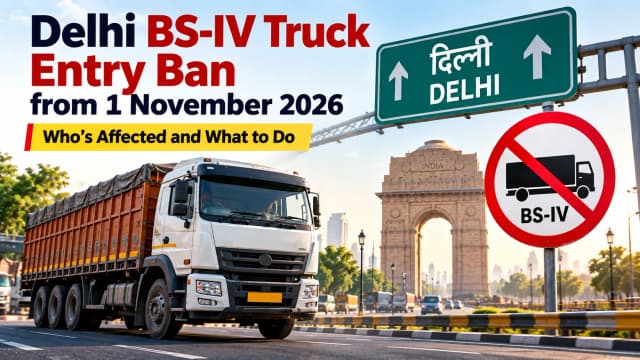
By contrast, BS-VI diesel, CNG and electric buses stay allowed in every case. Also, this lines up neatly with the Delhi BS-IV truck ban, which shuts out BS-IV goods vehicles from outside Delhi on the same date.
What an electric bus costs
On average, UP's numbers work out to about ₹1.70 crore per bus. That covers two sizes of AC bus, though, and it may include more than the bare vehicle, so treat it as a rough reference rather than a quote.
If you're a private operator choosing between a BS-VI diesel coach, a CNG bus and an e-bus, look at four things. Firstly, the purchase price and finance, because an e-bus costs far more upfront and the loan terms matter more. Secondly, route and charging, since a fixed intercity route with depot charging suits electric while long, changing tourist routes don't. Thirdly, running cost, because electricity is much cheaper per km than diesel, while CNG has become less attractive after this year's CNG price hike. Finally, think about the bus's whole life. BS-VI diesel meets today's rule, but CAQM has also asked states to move NCR bus services towards CNG and electric over the coming years.
Prices, EMIs, subsidies and permit rules vary by state and change frequently. Verify with your dealer, lender or RTO before you buy.
What this means for buyers and operators
If you own BS-IV coaches on Delhi routes, you have until 31 October 2026. So either re-plan routes to end outside Delhi, or replace or redeploy those buses now.
Schools and companies that hire buses should check their contractor's fleet today, because a BS-IV bus that can't enter Delhi in November will disrupt your service. If you're buying, then, choose BS-VI diesel at minimum. And if your routes are fixed and you can charge at a depot, get an electric quote alongside it, given where CAQM is heading. Finally, with state orders like UP's and private operators replacing BS-IV buses at the same time, delivery times may stretch, so don't leave it to October.
FAQs on UP Roadways electric buses
How many UP Roadways electric buses were approved?
250 AC electric buses for UPSRTC, of which 100 have 50 seats and 150 have 41 seats, at a total cost of ₹425.50 crore.
Where will the new e-buses run?
They'll run between Uttar Pradesh and Delhi, and also to major religious and tourist destinations in the state.
Can BS-IV private buses enter Delhi after 1 November 2026?
No. Under CAQM Direction No. 93, contract carriage, school and All India Tourist Permit buses must be BS-VI diesel, CNG or electric, although Delhi-registered buses aren't covered.
How will the bus rule be enforced?
Mainly through ANPR cameras and RFID at Delhi's entry points, according to reports on the directive.