Goods Vehicle Registration Ban in Delhi-NCR: Dates, Options

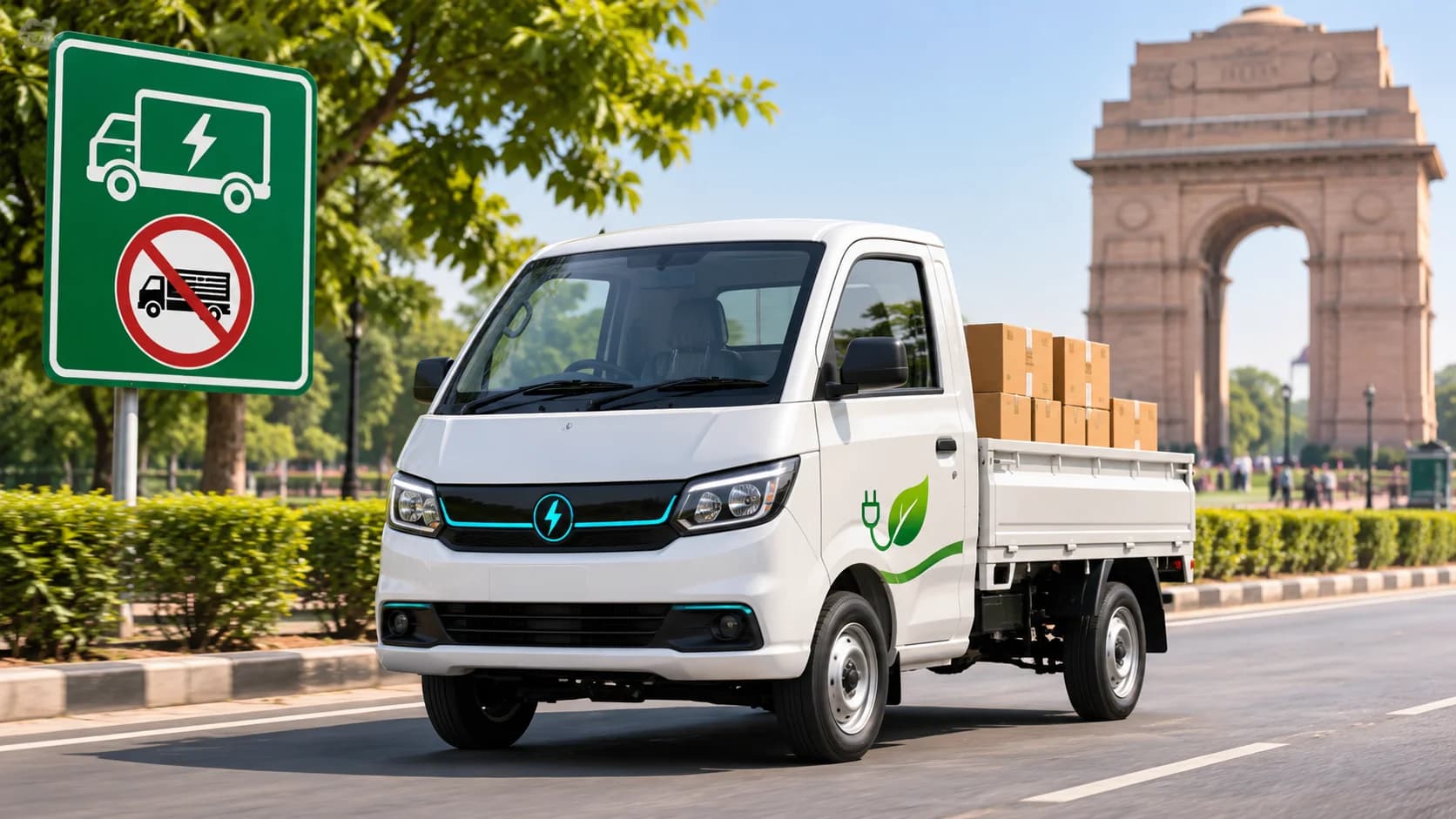
If you were planning to buy a diesel or CNG pickup for Delhi deliveries next year, you have about five weeks left. The goods vehicle registration ban starts in Delhi on 1 January 2027, and after that date only electric small goods vehicles will get a Delhi number. The rest of NCR follows in two steps, so where you register now matters as much as what you buy.
What the goods vehicle registration ban covers
The rule applies to N1 goods vehicles, which means anything with a gross vehicle weight of up to 3.5 tonnes. In practice, that's mini-trucks and most small pickups, the workhorses of every mandi and kirana supply run. The Commission for Air Quality Management (CAQM) approved the phase-out at its full commission meeting on 18 August, as Autocar Professional reported. Diesel, petrol and CNG versions are all covered. So why target pickups? CAQM's numbers say light goods vehicles are only about 1.2% of active vehicles in Delhi-NCR, yet they produce about 3.3% of fleet-wide particulate emissions. That's a lot of soot per vehicle, mostly because these trucks run all day in dense city traffic. Importantly, this is a ban on new registrations only. Your existing diesel Ace or CNG pickup can keep running for as long as its registration and fitness stay valid.NCR dates for the goods vehicle registration ban
| Where the vehicle is registered | Only electric N1 from |
|---|---|
| Delhi | 1 January 2027 |
| Gurugram, Faridabad, Sonipat, Ghaziabad, Gautam Buddha Nagar | 1 July 2027 |
| Rest of NCR | 1 January 2028 |
The Delhi EV incentive is worth more right now
Delhi's EV Policy 2026 came into force on 1 July 2026 and runs to 31 March 2030. For electric N1 goods vehicles, Outlook's guide to the policy lists a purchase incentive of up to ₹1,00,000 in year one, then ₹75,000 in year two and ₹50,000 in year three. Since year one runs until June 2027, buying in the next few months gets you the full amount. On top of that, there's a ₹50,000 scrapping incentive. However, the old vehicle has to be Delhi-registered and BS-IV or older. You then need to buy the electric one within six months of getting the Certificate of Deposit from an authorised scrapper. Also note that the central PM E-DRIVE scheme won't help here. Its electric truck subsidy only covers trucks above 3.5 tonnes GVW, so for a small pickup the Delhi money is all you'll get.Prices, EMIs, subsidies and permit rules vary by state and change frequently. Verify with your dealer, lender or RTO before you buy.
Almost nobody is claiming it yet
Here's the odd part. As of November, only 37 people had applied for the electric goods carrier purchase incentive, and just one had claimed the goods vehicle scrapping bonus, Autocar Professional reported on 25 November. Meanwhile, electric two-wheeler buyers had filed 12,584 claims. The industry blames the subsidy portal. Some eligible goods vehicle models reportedly don't even show up in its dropdown list, because models must meet the central scheme's localisation rules. Upfront price and charging worries also keep buyers away. Our advice: before you pay a deposit, ask the dealer to show you the exact model and variant listed on the portal. If it isn't there, you may not get the money, however much the salesperson promises.How to claim the ₹1 lakh
You apply on evsubsidy.delhi.gov.in, the portal Chief Minister Rekha Gupta launched in July. The deadline is 30 days from purchase and registration, so don't let the paperwork sit in the cab.- Keep your Aadhaar, the RC and voter ID ready. A business buyer also needs GSTIN, PAN and bank details.
- Money comes by direct benefit transfer, within 60 days after documents are verified.
- If you're scrapping an old pickup, upload the Certificate of Deposit with the same application.