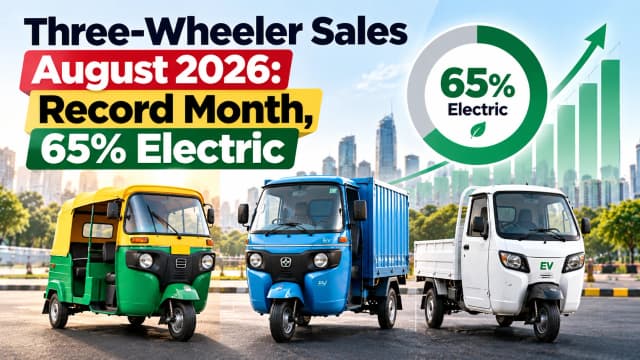
Three-Wheeler Sales September 2026: 1.33 Lakh, 65% Electric

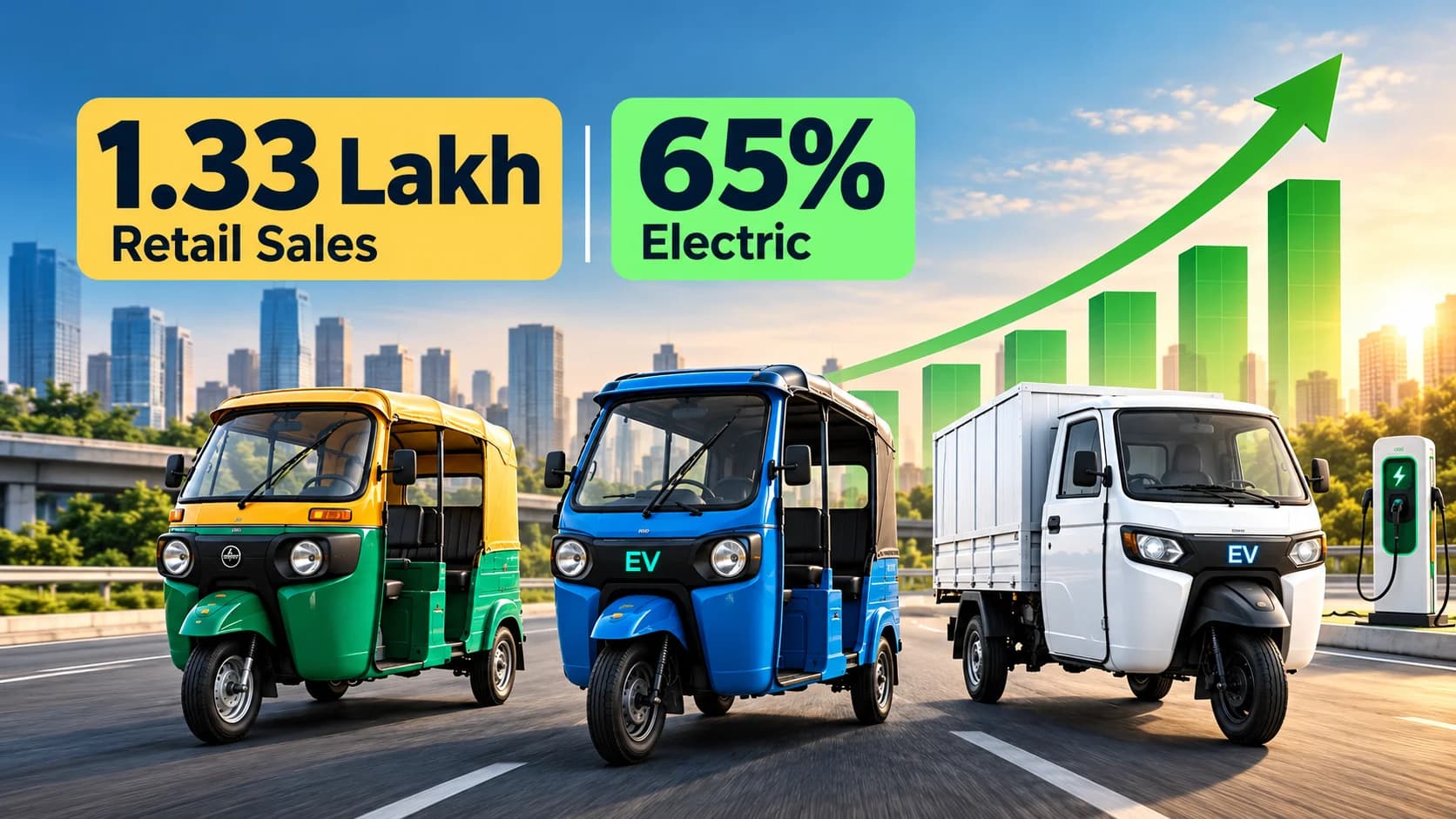
Three-wheeler sales September 2026 set another record. FADA counted 1,32,570 retail registrations, up 22% on last year and 8% on August. Nearly two in three were electric.
If you drive or own autos, the real story is where the growth came from. Rural sales rose 40%, urban just 5%, and goods carriers grew faster than anything else.
Three-wheeler sales September 2026 by segment
Passenger three-wheelers, the autos you see at every stand, made up the biggest share at 80,023 units, up 37.6%. Goods three-wheelers grew even faster, up 63.5% to 16,456. The remaining 36,000 or so were mostly e-rickshaws and e-carts, which FADA reports in separate categories.
The goods number is the one to watch. A 63% jump means more small traders and delivery operators are buying their own loaders instead of hiring. That's good for sellers but, at the same time, it means more competition for local delivery work.
Also, the rural-urban gap is striking. Rural retail rose 40%, while urban rose under 5%. In practice, city auto markets look close to saturated, so most new permits and new buyers are now in smaller towns.
Electric now leads three-wheeler sales
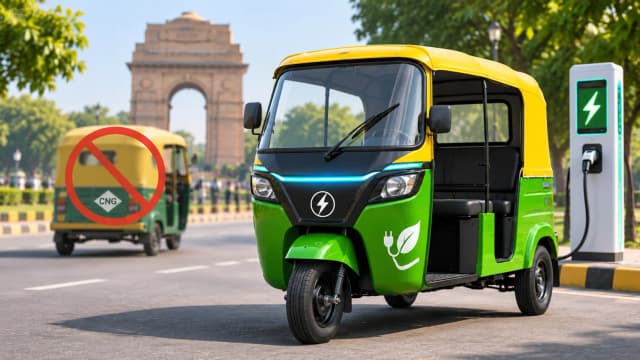
Electric took 64.9% of all three-wheeler retail. CNG and LPG held 21.9%, diesel 12.9%, and petrol barely registered. So for every CNG auto sold, three electric ones went out.
Vahan registrations tell the same story. According to EVreporter's September data, 44,738 electric passenger three-wheelers were registered. Bajaj, Mahindra Last Mile Mobility and TVS were the top three, while Bajaj, Mahindra and YC Electric led in electric goods carriers.
Who leads three-wheeler sales in September 2026
| Brand | Retail units | Share |
|---|---|---|
| Bajaj Auto | 46,680 | 35.2% |
| Mahindra (two entities) | 30,463 | 23.0% |
| Piaggio | 9,185 | 6.9% |
Bajaj still leads comfortably, with more than a third of the market. Its electric range, however, now sells close to Mahindra's. Bajaj sold 15,109 electric three-wheelers to Mahindra's 14,716, so the EV race is effectively a tie.
FADA lists Mahindra & Mahindra and Mahindra Last Mile Mobility separately, at 15,242 and 15,221 units. Together, they're a clear number two. Meanwhile, Bajaj's own figures show its domestic commercial vehicle dispatches grew 5% to 54,685, so it's selling more autos even as its motorcycle sales fall.
Growth without a subsidy
There's one detail that makes these numbers stronger than they look. The PM E-DRIVE purchase incentive for electric autos (L5) and e-rickshaws ended on 31 March 2026. The scheme was extended to 2028 only for e-buses, e-trucks and e-ambulances.
So since April, every electric auto has sold at full price, and buyers kept coming anyway. That tells you the running-cost gap is now big enough on its own. A driver doing 120 km a day saves enough on fuel over CNG to cover a good part of the EMI, which is why financiers are lending more freely on electric autos than they did two years ago.
For you, it also means there's no subsidy deadline to rush for. Instead, compare the on-road price, the battery warranty and the finance offer across two or three brands, because dealers have started competing on those rather than on a government discount.
What it means for resale and running costs
When two-thirds of new autos are electric, older diesel and CNG autos lose value faster. If you plan to sell a diesel auto within two years, sell sooner rather than later, especially in cities that are cutting new permits for non-electric autos.
On the other hand, CNG still makes sense on long daily runs where charging is hard. CNG prices have risen sharply this year, though, so check our CNG auto cost per km before you decide. For a first electric auto, our electric auto price guide compares the main models on price and range.
Compare this with August's three-wheeler sales, when retail was 1,22,281 and the EV share was 65.3%. So September added volume but didn't push EV share any higher. CNG held its ground.
What this means for buyers
- Electric is now the default for city autos. Buy CNG only if you run long routes with no reliable charging.
- If you buy electric, choose a lithium-ion pack with a long warranty, because the battery decides resale value.
- Goods carriers are in demand, so expect fewer discounts on loaders this festive season.
- In rural markets, compare service networks first. A cheaper auto with no workshop nearby costs you more in lost days.
FAQs on three-wheeler sales September 2026
How many three-wheelers were sold in September 2026?
FADA recorded 1,32,570 retail units, up 22.25% year on year and 8.41% on August.
Which brand sold the most three-wheelers in September 2026?
Bajaj Auto, with 46,680 units and a 35.21% share. Mahindra's two entities together came second.
What share of three-wheeler sales in September 2026 was electric?
About 64.9%. CNG and LPG took 21.9%, and diesel 12.9%.