Commercial Vehicle Scrappage: Fit or Scrap at 15 Years?

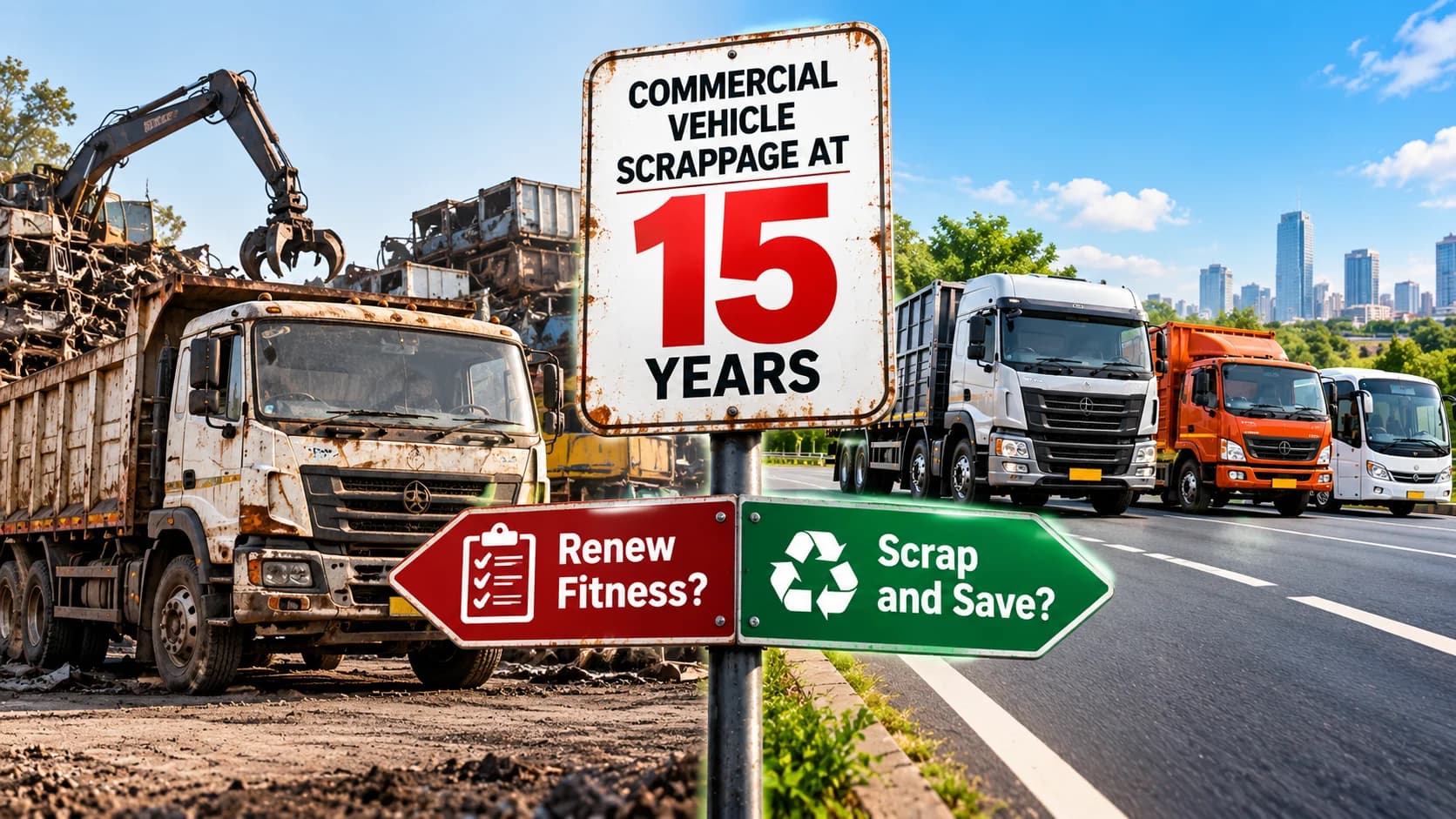
If your truck was registered in 2011, it turns 15 this year, and commercial vehicle scrappage is now a money question rather than a policy one. Keeping it on the road means a fitness renewal fee of ₹12,500 for a heavy vehicle, up from ₹2,500. Scrapping it, on the other hand, gets you a Certificate of Deposit that cuts tax and price on the replacement.
So which one pays? It depends on what the old truck still earns, but the maths has clearly moved towards scrapping.
What the fitness rules now cost an old truck
Every transport vehicle needs a valid fitness certificate. Once it's past eight years, you renew it every year. That part isn't new. What changed is the fee. The Central Motor Vehicles (Fifth Amendment) Rules, 2025 split old vehicles into three age bands and raised the charge sharply at each step.
For a heavy goods or passenger vehicle, the renewal now costs ₹12,500 between 15 and 20 years and ₹25,000 after 20. Earlier, it was a flat ₹2,500 for anything over 15. Lorry owners in Tamil Nadu protested the hike, but it stands.
The fee is only the start, though. Fitness testing is moving to automated testing stations, where brakes, emissions and lights are checked by machine instead of by an inspector's eye. An old truck that scraped through a manual test often needs real work before it clears an automated one. In practice, that means new brake liners, tyres, a turbo or injector job, and a day or two off the road.
Prices, EMIs, subsidies and permit rules vary by state and change frequently. Verify with your dealer, lender or RTO before you buy.
What commercial vehicle scrappage gives you back
When you hand the truck to a Registered Vehicle Scrapping Facility (RVSF), you get two things: the scrap price in cash, and a Certificate of Deposit. That certificate is where the real value sits, because it brings three separate benefits on your next vehicle.
- Road tax concession. Under GSR 720(E) of October 2021, states can cut motor vehicle tax by up to 15% for a transport vehicle bought against a certificate, for up to eight years. Each state sets its own figure, so check yours.
- Registration fee waiver on the new vehicle. It's small money on a truck, but it's free.
- A manufacturer discount of 1.5% to 3%. In 2024, Tata Motors, Ashok Leyland, VECV, Mahindra, Force, Isuzu and SML Isuzu agreed to offer it against a certificate.
Also, the certificate is tradeable. You can sell it to someone else who's buying, which helps if you're scrapping a truck but not replacing it yet.
Prices, EMIs, subsidies and permit rules vary by state and change frequently. Verify with your dealer, lender or RTO before you buy.
A worked example on a 15-year-old truck
Take a fleet owner with a 2011 medium-duty truck that runs about 60,000 km a year on the Ludhiana–Delhi route. Say the replacement costs ₹25 lakh ex-showroom. These are illustrative numbers, so plug in your own quote.
| Item | Keep and renew | Scrap and replace |
|---|---|---|
| Fitness fee (15–20 yrs, heavy) | ₹12,500 every year | Nil for eight years |
| Maker discount at 1.5–3% | Nil | ₹37,500 to ₹75,000 |
| Road tax and registration | Nil | Up to 15% off tax, fee waived |
So the paperwork benefits alone come to roughly ₹50,000 to ₹1 lakh on day one. That still won't pay for a new truck. However, the bigger saving is usually diesel and downtime. A BS-VI truck on the same route is typically more fuel-efficient, and it doesn't lose two days a month in the workshop.
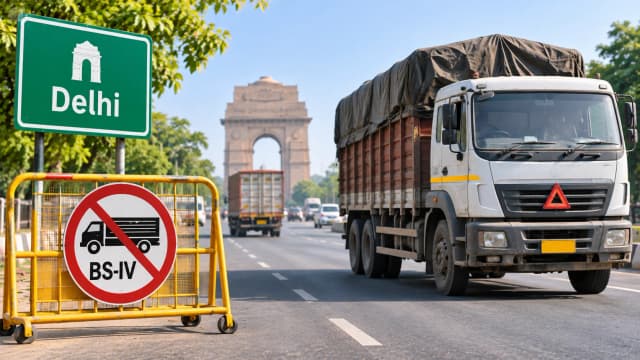
Then there's access. From 1 November, BS-IV goods vehicles registered outside Delhi can't enter the city. We've covered who the Delhi BS-IV truck ban hits separately. A 2011 truck is BS-III or BS-IV, so if your loads touch Delhi, the decision is already made for you.
When commercial vehicle scrappage makes sense, and when it doesn't
Scrap it if the truck needs a big repair to pass an automated fitness test, if it runs NCR loads, or if you were planning to buy a new one within a year anyway. In those cases, the certificate is basically a discount on a purchase you'd have made regardless.
Keep it a little longer if it's fully paid off, runs short local trips (a mandi-to-godown shuttle, say) and passes fitness without major work. Still, plan the exit. At 20 years, the fee doubles to ₹25,000, and it becomes harder to get finance or insurance for the vehicle.
Going electric? Then scrapping has one more payoff. Under PM E-DRIVE, the e-truck incentive needs a scrappage certificate for an old truck, so check our guide to electric truck prices and the PM E-DRIVE subsidy before you sell the certificate on.
How to scrap a commercial vehicle
First, find an RVSF on the Vahan portal; most states now have several. Next, clear any loan on the truck and get the NOC from your financier, because an RVSF won't take a hypothecated vehicle. Then hand over the RC, the vehicle and your ID. The RVSF uploads the details, cancels the registration, and issues the Certificate of Deposit and a Certificate of Vehicle Scrapping.
Ask two or three RVSFs for a quote before you choose one. Scrap prices are worked out on the vehicle's weight and steel rates, and they vary between yards.
What this means for buyers
- If your truck is 15, an annual fitness bill of ₹12,500 (₹25,000 after 20) is now part of the cost of keeping it. Count it in.
- Don't buy a replacement without a Certificate of Deposit if you have an old truck to give up, because you'd be leaving the 1.5–3% maker discount and the tax cut on the table.
- Ask your dealer whether their scrappage discount stacks with festive offers. Some do, some don't.
- Check your state's exact tax concession with the RTO, since it ranges from nil to the full 15%.
FAQs on commercial vehicle scrappage
Is scrapping compulsory for a 15-year-old commercial vehicle?
No. Nationally, a commercial vehicle can stay on the road as long as it passes fitness. However, Delhi-NCR has its own age limits, and a vehicle that fails fitness loses its registration.
How much commercial vehicle scrappage discount do truck makers give?
Between 1.5% and 3% of the price, against a valid Certificate of Deposit. The exact figure depends on the maker and the model, so ask for it in writing.
Can I sell my Certificate of Deposit?
Yes. It's transferable, so you can sell it to another buyer if you aren't replacing the vehicle yourself.
What is the fitness fee for a truck older than 20 years?
For a heavy goods vehicle, it's ₹25,000 per renewal under the 2025 amendment. Between 15 and 20 years, it's ₹12,500.