PARIVARTAN Scheme: What You Get for Swapping an Old Truck

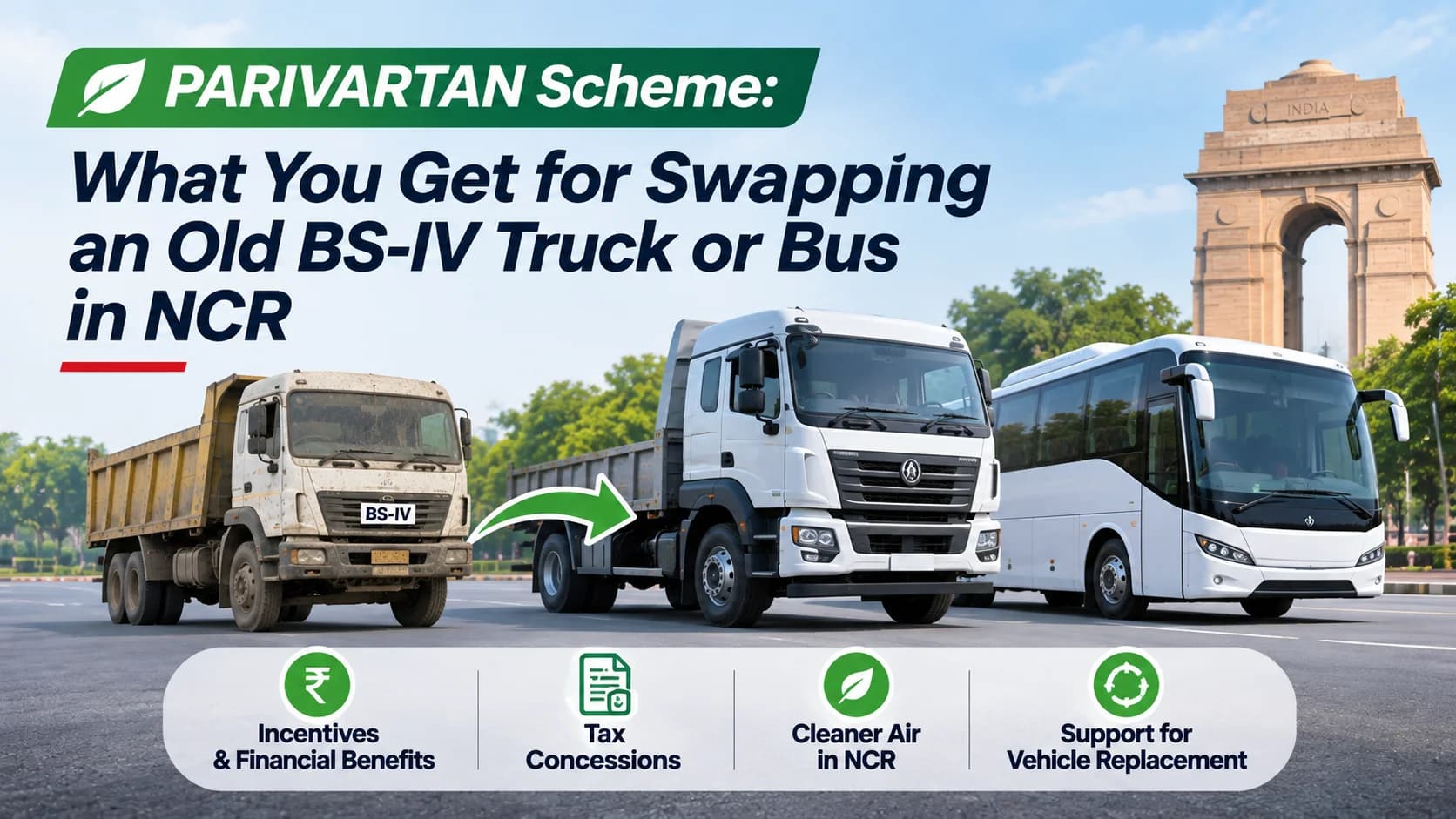
If you own a BS-IV truck on a Delhi, Gurugram or Ghaziabad number, the PARIVARTAN scheme will pay you to retire it. In fact, for a heavy truck, the Centre's own worked example puts the benefit at about ₹11 lakh. That's before you count what a cleaner truck saves you on GRAP days. The catch, though, is that the money only comes once you buy the replacement through the scheme.
What the PARIVARTAN scheme gives you
The Cabinet approved the ₹9,585 crore programme on 3 June 2026, and MoRTH launched it on 14 July. It's voluntary, so nobody forces you to scrap. Instead, it stacks several benefits on the new vehicle:
- A minimum 8% discount on ex-showroom price from participating makers
- A 5 percentage-point interest subsidy on the loan for five years
- A full motor vehicle tax waiver for 10 years, plus no registration fee
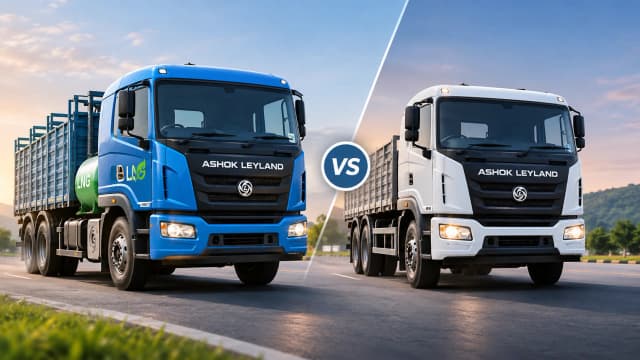
- Monthly fuel vouchers for five years if you buy BS-VI diesel or CNG, or a one-time ₹64,000 to ₹2.56 lakh if you buy electric
Also, Delhi, Haryana, UP and Rajasthan have all notified the tax concession. Meanwhile, 15 makers covering about 96% of the market have signed up for the discount. Most recently, Blue Energy Motors joined on 22 October so it can sell electric heavy trucks under the scheme.
Who qualifies
First, your truck or bus has to be BS-IV or older. It also has to have been registered in one of the 37 NCR districts by 30 April 2026. That covers 13 in Delhi, 14 in Haryana, eight in UP and two in Rajasthan. However, government-owned vehicles are left out.
That's a big pool, because about 2.32 lakh vehicles fit. Of those, roughly 1.92 lakh are BS-IV.
What you can buy in its place
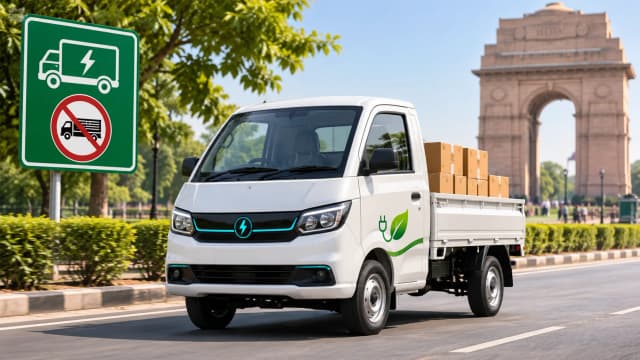
In most of the NCR, you can switch to BS-VI diesel, CNG or electric. Delhi is stricter, however. There, a light goods vehicle can only be replaced with an electric one, while buses must go CNG or electric. Medium and heavy trucks can still go BS-VI diesel.
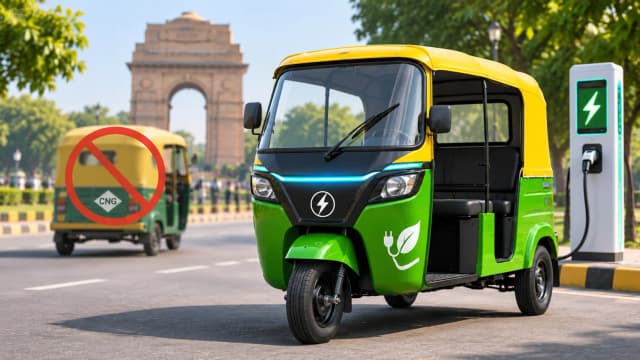
Two more rules trip people up. For example, if your old vehicle runs on CNG, the new one must be CNG or electric. And you can't move up a class, so a medium truck can't become a heavy one.
Prices, EMIs, subsidies and permit rules vary by state and change frequently. Verify with your dealer, lender or RTO before you buy.
PARIVARTAN scheme benefits by truck size
Fuel vouchers are capped by category, so bigger trucks get more. Also, the ministry has published an illustrative total for a non-electric goods vehicle in each class:
| Category | Fuel voucher cap per month | Scheme's example total |
|---|---|---|
| Light (LGV) | ₹1,200 | ₹2.78 lakh |
| Medium (MGV) | ₹2,500 | ₹5.61 lakh |
| Heavy (HGV) | ₹4,800 | ₹11.10 lakh |
Vouchers lapse at the end of each month, so they only help if your truck actually fills up at IOCL, HPCL, BPCL or IGL outlets. That said, any truck doing real work will easily burn through ₹4,800 of diesel a month.
Prices, EMIs, subsidies and permit rules vary by state and change frequently. Verify with your dealer, lender or RTO before you buy.
A worked example for a Delhi HGV owner
Say you run a 2016 BS-IV tipper on a Delhi number, and you're replacing it with a BS-VI diesel that costs ₹40 lakh ex-showroom. The 8% discount takes ₹3.2 lakh off straight away.
Next, suppose you borrow ₹32 lakh for five years. At 15%, for instance, the EMI is about ₹76,100. With the five-point subsidy it drops to roughly ₹68,000, so you save about ₹8,100 a month, or nearly ₹4.9 lakh over the loan. Then add up to ₹2.88 lakh in fuel vouchers over 60 months.
Together, that's close to ₹11 lakh, which matches the ministry's figure. On top of that, there's 10 years without road tax. These are our own sums on an assumed price and rate, so ask your dealer and lender for the exact figures on your truck.
Scrap it or sell it
Older BS-III vehicles must be scrapped at a registered scrapping facility. BS-IV owners get a choice, though. You can scrap it, or you can sell it to a buyer outside the NCR in an eligible city. Either way, you'll get a Certificate of Deposit to claim the benefits.
For a well-kept BS-IV truck, selling usually fetches more than scrap value. Still, compare both offers, because our scrappage guide shows what a scrap certificate is worth elsewhere. States will also waive dues older than a year on a vehicle you scrap.
How to apply
In practice, everything runs through the PARIVARTAN portal, which links to Vahan and the scrapping system. First you register once and check eligibility. Then you scrap or sell the old vehicle, buy the replacement at a listed dealer and register it. After that, the benefits follow.
For the loan, Canara Bank is the nodal bank, and 42 banks and NBFCs with 3,806 branches had joined by late August. So you don't have to switch lenders just to get the subsidy.
Is the PARIVARTAN scheme worth it now?
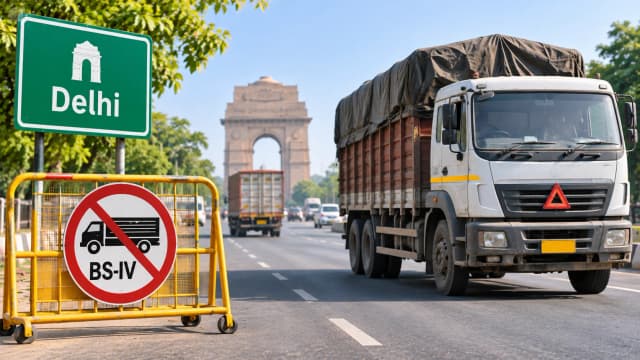
For a Delhi-registered BS-IV truck, we'd say yes, and soon. This winter's GRAP truck rules already park BS-IV medium trucks at Stage III, while from 1 November outside-Delhi BS-IV trucks can't enter at all. So the old truck is losing work as well as value.
Uptake has been slow, too. By late August, for example, only about 1,450 owners had registered, against a target of 25,000 by October. That means dealers aren't swamped yet. However, there's no fixed closing date that we could find, and the government plans to finish enrolment within about a year.
What this means for buyers
Don't buy a replacement truck outside the scheme if your old one qualifies. Doing so throws away the discount, the tax waiver and the subsidy all at once.
If you're in Delhi and run a small pickup, plan for electric, because that's the only option for LGVs there. Meanwhile, our electric truck price guide lists what's on sale. For heavier trucks, though, BS-VI diesel with fuel vouchers is usually the simpler sum.
PARIVARTAN scheme FAQs
Is the PARIVARTAN scheme mandatory?
No, it's voluntary. However, BS-IV trucks face growing entry and GRAP restrictions in Delhi anyway.
Can I buy a used replacement vehicle?
Yes, but you'll get only a 50% road tax concession instead of 100%. The interest subsidy and fuel or EV benefits still apply.
Can I replace a Delhi light goods vehicle with a diesel one?
No, because in Delhi an LGV can only be replaced with an electric vehicle under the scheme.
Is there a deadline to apply?
We found no fixed closing date. Still, the government aims to register all beneficiaries within a year of the July launch, so don't leave it late.