Tata Ultra E.7 for Amazon: Should Your Fleet Sign Up?

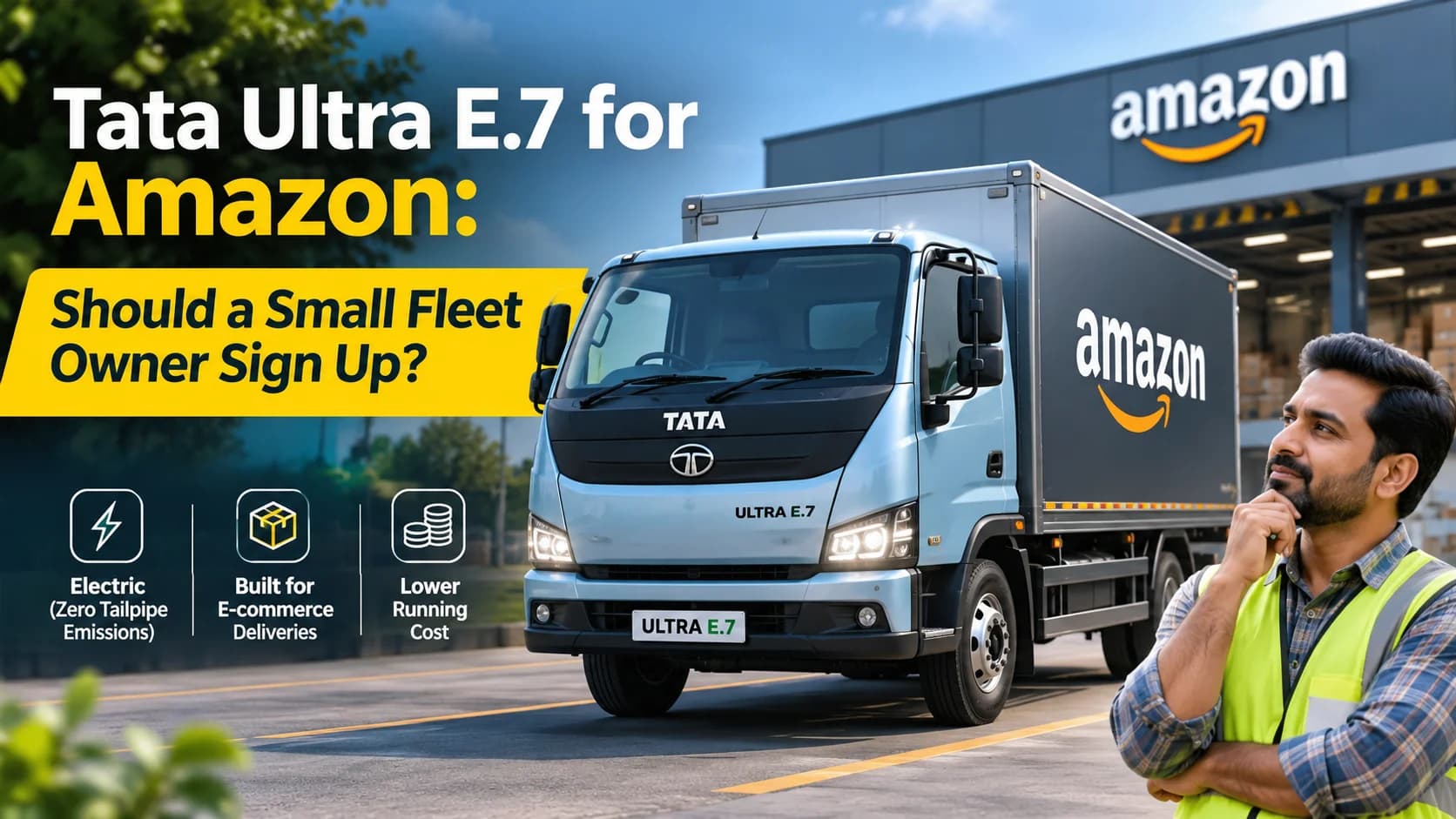
Amazon wants 3,000 Tata Ultra E.7 electric trucks running in its network, but it won't buy a single one. Its carrier partners will. So if you run a few trucks for Amazon in Delhi, or hope to, the real question is simple: does a 7.5-tonne electric truck earn you more than the diesel you'd otherwise buy?
What the Amazon and Tata deal actually says
Amazon and Tata Motors announced the plan in late October. According to Amazon's own release, Tata supplies the trucks while Amazon's carrier partners own and run them. That means the loan, the battery risk and the uptime are all yours, not Amazon's. The rollout starts in Delhi. After that, Amazon wants to electrify the 2,800 km Delhi–Bengaluru–Chennai run along NH48. The first 20 trucks were flagged off on 27 October, and Yahhvi is building the charging hubs. Amazon already has 10 charging yards from Yahhvi in India.Tata Ultra E.7 specifications
The first batch is all Ultra E.7. Tata hasn't published a price, so treat any figure you hear from a dealer as a quote rather than a list price.| Spec | Tata Ultra E.7 |
|---|---|
| GVW / payload | 7.5 tonnes / 3.1 tonnes with container |
| Battery / range | 96 kWh LFP / up to 130 km |
| Motor / deck | 240 kW / 14 ft |
Does the Tata Ultra E.7 pay for a small fleet?
It depends almost entirely on three numbers: the truck's price, your charging tariff and how many km you run each month. Here's how to work it out. First, energy per km. A 96 kWh pack over 130 km means roughly 0.74 kWh per km at best. Real use with a full load and AC will be higher, so add a margin. For example, if you pay ₹10 per kWh at a depot charger, your energy cost is about ₹7.40 a km. Then compare it with what your diesel LCV actually costs per km from your own fuel logs, not the brochure. Second, the price gap. An electric truck costs more upfront than a diesel one of the same class. So you need enough km every month for the running-cost saving to cover the extra EMI. As a rough rule, an e-truck that sits idle half the day rarely pays back. That's where the Amazon contract helps. A carrier partner with assured daily loads can keep the truck busy, which is the single biggest factor in e-truck maths. We saw the same logic in the Paradeep Parivahan–JSW electric truck contract: a long, fixed contract is what makes the finance work.Prices, EMIs, subsidies and permit rules vary by state and change frequently. Verify with your dealer, lender or RTO before you buy.
The Delhi no-entry rule could be worth more than fuel
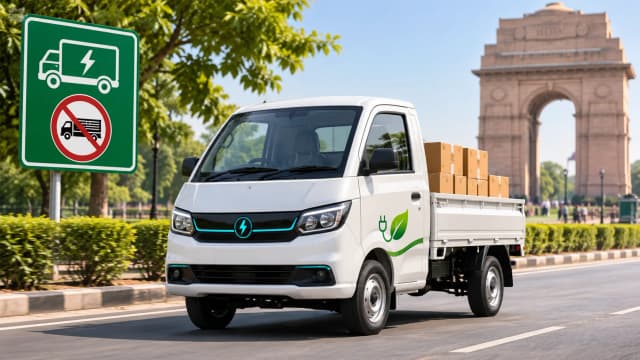
Delhi's 2026 EV policy, which took effect on 1 July, gives the first 1,000 electric N2 trucks (3.5 to 12 tonnes GVW) a 10-year exemption from no-entry hours. The Ultra E.7 sits at 7.5 tonnes, so it falls in that class. But there's a catch. The exemption only covers trucks bought within three months of the policy's notification. Reports don't give the exact notification date, so the window may already have closed. Before you count on it, ask the Delhi transport department whether any of the 1,000 slots are still open. If you do get one, though, daytime entry changes everything. A truck that can deliver at 2 pm instead of waiting at the border until night does more trips. Meanwhile, as our GRAP truck rules guide explains, the winter pollution curbs fall hardest on older diesel trucks, so an electric truck keeps running when they're stopped.Who should sign up, and who shouldn't
In our view, the Tata Ultra E.7 suits a carrier who already runs Amazon or similar e-commerce loads inside Delhi NCR and can charge at a depot overnight. If you have steady, short, repeat routes, it's worth a serious costing. On the other hand, if your trucks run mixed loads, long single trips or irregular schedules, stay with diesel for now. The 130 km range will cost you trips, and a missed trip wipes out a week of fuel savings. Also, check whether you qualify for the central e-truck incentive; our PM E-DRIVE electric truck subsidy explainer covers that.What this means for buyers
- Get a written price for the Tata Ultra E.7, including battery warranty terms, before you sign any carrier agreement.
- Ask Amazon or your aggregator how many km a day they'll actually guarantee. That number decides whether the truck pays.
- Check charging access in writing. Then confirm who pays if a hub charger is down.
- Ask the Delhi transport department about the N2 no-entry exemption before you assume you'll get it.